
Every country has a unique currency that is used only by them. Some regions like the European Union have adopted a joint currency but mostly each currency is specific to its country. Buying and selling of currencies for trade and business purposes is one of the biggest markets in the world. This concept is very familiar to people who live outside of the USA and Europe, and to investors. The market in which these currencies are traded is called the Foreign Exchange market or the Forex Market.
So, You Buy Money with Money?
When you travel around the globe, you will need to exchange your US dollars for the local currency of the country you are in. This usually saves you a lot of money and allows for ease of payment during your travels. When you do this, you have technically participated in the forex market. Of course, the actual forex trading market operates on much bigger amounts than your vacation exchanges, but the system operates the same way.
Let’s break down the math behind forex trading so you can get a better understanding of how the process works. Forex trading always works in pairs, one currency for the other. On paper, this is written as Currency 1/Currency 2 (EUR/USD). Forex pairings are always written in symbols and abbreviations, so the European currency is abbreviated to EUR and the United States dollar is abbreviated to USD. The structure of the pairing implies how much of the first currency (EUR) you will need to purchase the second currency (USD).
The amount you will need to purchase each currency is determined by the exchange rate of each currency to the other. For example, the exchange rate of Euro to USD is 1 EUR for 1.18 USD. This means to buy 1 Euro you will need $1.18 US dollars. And in the example above of EUD/USD, as written you would need 0.85 Euros to purchase 1 USD. So, when you are purchasing British Pound GBP, Turkish Lira YTL, Japanese Yen JPY, or Canadian Dollar CAD, you will always be seeing a formula of X/GBP, X/YTL, X/JPY, and X/CAD. The x in the equation is representative of the currency with which you plan to buy the listed currencies above.
Learn more about Forex trading.
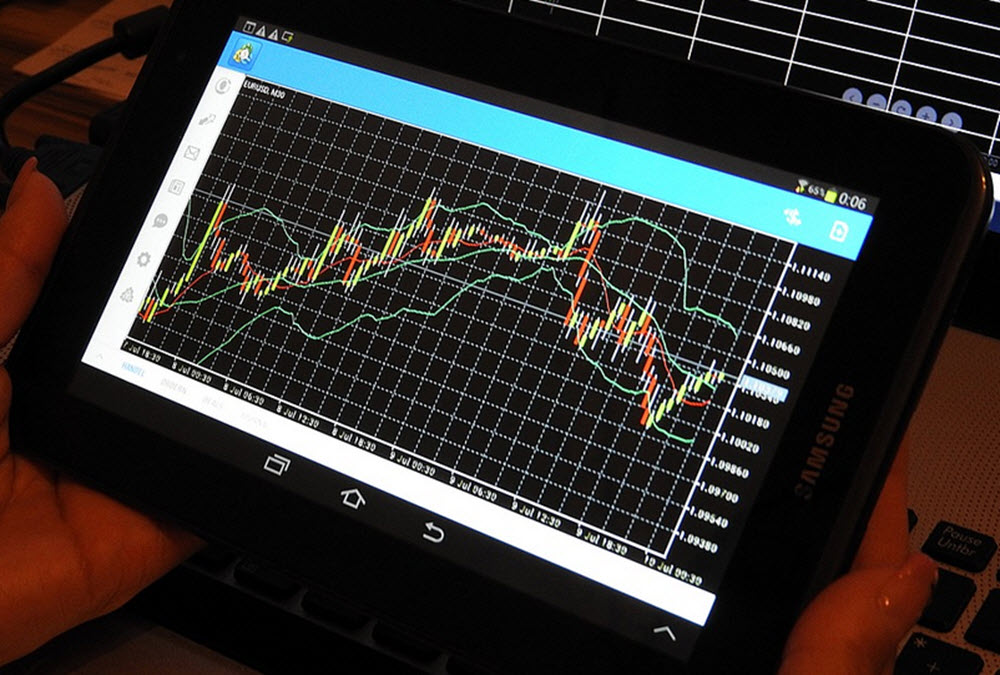
Common Currency Pairs
Common Forex Currency Pairs & Trading Slang
Standard ISO codes, conventional nicknames & market classification
| Currency Pair | Traders’ Nickname | Currencies Involved | Category | Naming Origin |
|---|---|---|---|---|
| EUR / USD | Fiber / Euro | Euro / US Dollar | Major | Named after the transatlantic fiber-optic cables connecting European and US market centers. |
| GBP / USD | Cable | British Pound / US Dollar | Major | Originates from the 1858 transatlantic telegraph cable laid across the ocean floor to sync quotes. |
| USD / JPY | Gopher / Ninja | US Dollar / Japanese Yen | Major | Frequently referred to simply as “The Yen” or historically as “Gopher” on interbank dealing desks. |
| USD / CHF | Swissy | US Dollar / Swiss Franc | Major | Shorthand reference to the Swiss Franc (Confœderatio Helvetica Franc). |
| AUD / USD | Aussie | Australian Dollar / US Dollar | Commodity / Major | Colloquial term for an Australian, reflecting Australia’s commodity-export driven economy. |
| USD / CAD | Loonie | US Dollar / Canadian Dollar | Commodity / Major | Named after the solitary water bird (common loon) stamped on the Canadian $1 coin. |
| NZD / USD | Kiwi | New Zealand Dollar / US Dollar | Commodity / Major | Derived from the flightless kiwi bird featured on the reverse side of the New Zealand $1 coin. |
| EUR / JPY | Yuppy / Euppy | Euro / Japanese Yen | Cross | A phonetic portmanteau blending “EUR” and “JPY”. |
| GBP / JPY | Guppy / Geppy / The Dragon | British Pound / Japanese Yen | Cross | Nicknamed “The Dragon” and “The Widow-maker” due to its extreme daily pip volatility and momentum. |
| EUR / GBP | Chunnel | Euro / British Pound | Cross | Named after the Channel Tunnel linking the United Kingdom to mainland France. |
| USD / RUB | Barnie | US Dollar / Russian Ruble | Exotic | Play on Barney Rubble from The Flintstones; paired alongside USD/EUR (“Betty”). |
EUR/USD = 1.0850), the first currency is the Base Currency (fixed at 1 unit) and the second is the Quote / Counter Currency (the amount needed to purchase one unit of the base).
Why Forex?
Finding the correct investment, and opportunity is never easy. With so many options of how to spend and invest your money, it becomes hard to find the best method that suits you the best. So, why is Forex such a preferred choice? The short answer is the 4 trillion USD in daily volume, which makes forex the strongest and biggest trading market in the world. This number includes all entities in the market, from the individuals, businesses, corporation, and countries. You also do not need a large sum to start your forex trading adventure, this is another one of the reasons why forex is preferred by so many investors.
Forex also presents you with the option to only follow and stay up to date on the currencies you are willing to trade on. This means that you do not need to be up to date on all the movements of the entire market as you would with stocks, bonds and binary options trading. It is however recommended that you do spend the necessary time to stay up to date on all the news coming out of the countries whose currency you want to invest in. A small change of laws or a big crisis can and will massively affect the value of the currency, so spend the appropriate time on research.