
How to Fund a Small Business in the United States

How to Fund a Small Business in the United States

Introduction

Funding a small business in the United States involves evaluating a range of financing strategies, each with distinct requirements, costs, and implications for ownership and control. Entrepreneurs must consider not only how much capital is needed, but also how quickly it is required, how it will be repaid, and what impact the funding source may have on long-term operations. The appropriate financing structure depends on multiple factors, including the nature of the business, projected revenue, industry risk, credit profile, and tolerance for financial risk.

Small businesses often rely on a combination of funding sources rather than a single solution. For example, an entrepreneur may invest personal savings to launch the business, secure a loan to support early operations, and later seek outside investors to scale. Understanding the advantages and limitations of each financing option allows business owners to make informed decisions aligned with their operational goals and financial capacity.

The following sections outline several common methods of financing a small business in the United States, examining how each works, when it may be appropriate, and the associated benefits and limitations.

Personal Savings

Using personal savings is one of the most accessible approaches to financing a small business. Many entrepreneurs begin this way because it does not require approval from lenders, negotiations with investors, or compliance with extensive application procedures. Funds may come from savings accounts, investment accounts, retirement distributions, or proceeds from the sale of personal assets.

One of the primary advantages of using personal savings is that the business owner retains full ownership and control. There is no obligation to repay borrowed capital with interest, and no requirement to share equity with investors. This structure allows for independent decision-making and flexibility in directing company strategy. It also simplifies accounting and avoids the administrative burden associated with loan documentation or investor reporting.

However, this method concentrates financial risk on the individual. If the business underperforms or fails, personal assets may be depleted. In addition, relying exclusively on personal savings may limit the scale at which a business can launch. Entrepreneurs must carefully assess how much capital is available and whether retaining a financial cushion for personal expenses is prudent. Maintaining adequate reserves for living costs and emergencies can reduce financial strain during the early stages of business development.

Individuals considering the use of retirement funds should also be aware of potential tax consequences and penalties. Early withdrawals from certain retirement accounts may trigger income taxes and additional charges unless structured carefully through permissible arrangements. Consultation with a financial advisor or tax professional is often advisable before making such decisions.

Bank Loans

Obtaining a bank loan remains a widely used method for financing small businesses. Commercial banks and credit unions offer various forms of loans, including term loans, lines of credit, equipment financing, and commercial real estate loans. The structure and repayment schedule vary depending on the purpose of the funds and the borrower’s financial profile.

A traditional bank loan typically involves borrowing a fixed amount that is repaid over a predetermined term with interest. Interest rates may be fixed or variable and are often influenced by prevailing market conditions, the borrower’s credit history, and the financial strength of the business. In many cases, lenders require collateral, such as real estate, equipment, inventory, or personal guarantees, to secure the loan.

The advantage of bank financing is that interest rates are often lower than those associated with alternative lenders or credit cards. Additionally, long-standing relationships with financial institutions can facilitate access to ongoing lines of credit and other banking services. For established businesses with stable revenue and strong credit profiles, traditional loans may offer predictable repayment schedules and manageable financing costs.

The challenges associated with bank loans include a rigorous application process and strict underwriting requirements. Lenders typically request detailed financial statements, business plans, cash flow projections, and tax returns. Startups without operating history may find it difficult to qualify unless the owner has strong personal credit and substantial collateral. The review process may take several weeks, which can delay access to capital when funds are needed promptly.

SBA Loans

The Small Business Administration (SBA) supports small businesses by partially guaranteeing loans made by participating lenders. Although the SBA does not generally lend money directly, its guarantee reduces the lender’s risk, making it easier for small businesses to obtain financing. Several loan programs are available, including the 7(a) Loan Program, the 504 Loan Program for real estate and equipment, and microloan options for smaller funding needs.

SBA loans often offer comparatively favorable features, such as lower down payments, longer repayment terms, and competitive interest rates. Because of the government guarantee, lenders may be more willing to extend credit to businesses that might otherwise struggle to qualify for traditional loans. Repayment terms can extend up to 10 years for working capital and up to 25 years for real estate, depending on the program.

However, SBA loans involve extensive documentation and compliance requirements. Borrowers must meet eligibility criteria related to business size, industry classification, and use of proceeds. The application process may require detailed financial statements, ownership disclosures, and business plans. Approval timelines can be lengthy, making this option less suitable for urgent financing needs. Additionally, personal guarantees are often required from owners with significant equity stakes.

Despite the complexity, SBA loans are frequently used by small businesses seeking structured, long-term financing with manageable repayment conditions.

Angel Investors

Angel investors are individuals who provide capital to early-stage businesses, typically in exchange for equity ownership or convertible debt. These investors are often experienced entrepreneurs or professionals who seek opportunities with growth potential. Angel funding can be especially relevant for startups in industries such as technology, healthcare, or consumer products.

Beyond capital, angel investors may contribute strategic guidance, mentorship, and access to professional networks. This involvement can assist with refining business models, improving operational practices, and identifying additional financing sources. For new ventures that lack established revenue streams, angel investment may provide the necessary funding to develop products, conduct market testing, or expand initial operations.

In exchange for their investment, angels typically receive a percentage of ownership in the company. This arrangement reduces the founder’s equity stake and may involve negotiated rights related to decision-making, reporting, or exit strategies. While the equity share may be smaller than that required by venture capital firms, business owners should carefully review term sheets and understand valuation assumptions before accepting investment.

Angel investors generally expect a return on investment through a future sale of the company, merger, or public offering. This expectation may influence company strategy toward growth-oriented outcomes, which may not align with every entrepreneur’s objectives.

Venture Capital

Venture capital financing is designed for businesses with high growth potential and scalable models. Venture capital firms manage pooled funds from institutional investors and allocate capital to emerging companies that demonstrate strong prospects for rapid expansion. This form of funding is common in technology-driven sectors, biotechnology, and other innovative industries.

Venture capital investments often involve substantial amounts of funding distributed in stages, or “rounds,” linked to performance milestones. In addition to capital, venture capitalists typically take an active role in governance. They may request board seats, voting rights, and input into major strategic decisions, such as mergers, acquisitions, and executive appointments.

The significant advantage of venture capital is access to large-scale funding that can support rapid hiring, product development, market expansion, and infrastructure investment. Venture capital firms also provide strategic expertise, industry connections, and credibility that may facilitate partnerships and customer acquisition.

However, this financing model involves considerable equity dilution and shared control. Founders may be required to meet aggressive growth targets and operate under defined performance expectations. Venture capitalists typically aim for high returns within a defined timeframe, often five to ten years, which can influence strategic planning and operational priorities. This approach is best suited to companies positioned for accelerated expansion rather than steady, incremental growth.

Credit Cards

Using credit cards to finance business expenses is common, particularly during the early stages. Business credit cards can be used to cover short-term operational costs such as supplies, travel, marketing, or inventory purchases. Approval processes are generally faster than traditional loans, and credit limits may increase as payment history develops.

Credit cards provide flexibility and may offer rewards programs, cashback incentives, or introductory interest rates. They can also help establish a business credit history when managed responsibly. For short-term expenses that can be repaid quickly, credit cards may function as a temporary financing solution.

The primary concern associated with credit card financing is the potential for high interest costs. Interest rates on business credit cards are typically higher than those for traditional loans, especially if balances are carried beyond promotional periods. Accumulating substantial balances can strain cash flow and increase financial risk. Consistent on-time payments are essential to prevent escalating debt and to protect credit scores.

Business owners should evaluate whether projected revenue can support timely repayment before relying extensively on credit cards.

Crowdfunding

Crowdfunding platforms enable businesses to raise funds by collecting small contributions from a large number of individuals, typically through online campaigns. This model allows entrepreneurs to present product concepts or business ideas directly to potential customers. Campaigns may operate under reward-based, equity-based, or donation-based structures, depending on the platform and regulatory framework.

Reward-based crowdfunding involves offering products, merchandise, or acknowledgments in exchange for financial contributions. Equity-based crowdfunding allows investors to receive ownership shares, subject to securities regulations. This approach can expand investor access beyond accredited individuals.

Crowdfunding can serve as both a financing method and a market validation tool. A successful campaign may demonstrate consumer interest and generate early sales data. It can also increase brand visibility and establish a base of engaged supporters. However, effective campaigns typically require detailed planning, promotional efforts, and transparent communication regarding product development timelines.

If funding goals are not met, some platforms may return contributions to backers, resulting in no capital raised. Additionally, businesses must fulfill commitments to contributors, which can create operational obligations even before products are fully developed. Managing customer expectations is critical to maintaining credibility.

Conclusion

Selecting an appropriate funding strategy requires analyzing financial needs, growth objectives, risk tolerance, and ownership preferences. Self-financing through personal savings preserves autonomy but concentrates financial risk. Traditional bank loans and SBA-backed loans provide structured capital with defined repayment schedules, though they involve detailed qualification requirements. Angel investors and venture capital firms offer access to expertise and larger capital pools in exchange for equity and partial control. Credit cards and crowdfunding platforms present additional options for short-term financing and market validation.

In many cases, combining multiple funding sources may provide balanced support for startup formation and expansion. Careful planning, realistic financial projections, and professional guidance can assist business owners in evaluating which financing methods align most effectively with long-term operational goals. Understanding each option’s cost, structure, and strategic implications is fundamental to building a sustainable and financially stable enterprise.

How to Fund a Small Business in the United States

Understanding Small Business Funding in the United States

Starting and operating a small business in the United States requires careful financial planning and a clear understanding of the funding landscape. Access to capital affects every stage of a company’s development, from initial formation to expansion into new markets. The structure, cost, and availability of financing influence operational flexibility, ownership structure, and long-term profitability. Entrepreneurs who understand the range of funding options available are better positioned to align financial decisions with strategic objectives.

Funding decisions should be guided by realistic financial projections, a detailed business plan, and a comprehensive assessment of risks. Capital can be obtained through personal resources, debt financing, equity investment, or alternative mechanisms such as grants and crowdfunding. Each method carries implications for cash flow, control, repayment obligations, and tax treatment. A structured evaluation of these factors supports sustainable growth and financial stability.

Personal Savings

One of the most common forms of startup funding is the use of personal savings. This approach allows founders to retain complete ownership and decision-making authority. By investing their own capital, entrepreneurs avoid interest expenses, external reporting requirements, and ownership dilution. The use of personal savings can also signal commitment to future lenders or investors, demonstrating that the founder has assumed financial risk alongside other stakeholders.

Personal savings may include funds held in checking or savings accounts, certificates of deposit, or other liquid assets. Some entrepreneurs choose to access retirement accounts under specific federal provisions, though this requires careful compliance with tax regulations and carries long-term financial consequences. Others may leverage proceeds from the sale of personal property to fund early operational costs.

Despite its advantages, self-funding presents clear limitations. Personal capital is finite and may not support significant expansion or unforeseen expenses. Concentrating financial resources in a single venture can increase personal financial vulnerability. Entrepreneurs should conduct a detailed cash flow forecast to determine whether available savings can realistically cover startup costs, operating expenses, and a reasonable contingency reserve.

Bank Loans

Traditional bank loans remain a primary source of small business financing in the United States. Commercial banks and credit unions offer term loans, lines of credit, and specialized financing products tailored to different industries. Securing a bank loan typically requires a detailed business plan, financial statements, credit history evaluation, and evidence of the borrower’s ability to repay the obligation.

Term loans provide a lump sum disbursed at closing, which the borrower repays over a fixed period with interest. These are often used for equipment purchases, real estate acquisition, or large capital expenditures. Lines of credit function differently, allowing businesses to draw funds as needed up to a predetermined limit. Interest accrues only on the amount used, which offers flexibility for managing working capital fluctuations.

Banks evaluate risk through credit scores, collateral, revenue projections, and debt-to-income ratios. Collateral may include business assets, inventory, accounts receivable, or personal assets in certain cases. Interest rates vary depending on creditworthiness, prevailing market rates, and loan structure. Fixed rates offer predictable payments, while variable rates may adjust over time.

Although bank financing can provide substantial capital at relatively competitive interest rates, approval standards may be stringent. Startups without operating history often encounter greater difficulty than established businesses with consistent revenue streams. Preparing accurate documentation and maintaining organized financial records enhance the likelihood of approval.

SBA Loans

Loans supported by the U.S. Small Business Administration are designed to reduce lender risk and expand access to credit for small businesses. These loans are issued by participating banks and financial institutions, with a portion of the loan guaranteed by the federal government. This guarantee encourages lenders to extend credit to businesses that might otherwise be considered higher risk.

The most commonly used SBA loan programs include the 7(a) loan program, which supports general business purposes, and the 504 loan program, which focuses on long-term fixed assets such as real estate and equipment. The Microloan program provides smaller loan amounts to support startups and underserved markets.

SBA loans often feature longer repayment terms than conventional bank loans. For example, working capital loans may extend up to ten years, while real estate loans can extend up to twenty-five years. Longer terms can reduce monthly payments, improving cash flow predictability. Interest rates are usually competitive and may be fixed or variable within SBA guidelines.

The application process for SBA loans can be more detailed and time-intensive than other financing methods. Borrowers must provide comprehensive documentation, including business plans, tax returns, and financial projections. Although the process can require significant preparation, the structured underwriting framework often results in accessible financing for qualifying businesses.

Angel Investors

Angel investors are private individuals who provide capital to early-stage businesses in exchange for equity or convertible debt. These investors typically focus on startups with growth potential, innovative products, or scalable business models. In many cases, angel investors contribute not only financial resources but also industry expertise, professional networks, and strategic guidance.

Equity financing through angel investment involves transferring partial ownership of the business. The investor assumes risk in exchange for a potential return on investment if the company increases in value or is later acquired. Convertible debt structures allow the investment to convert into equity under predefined conditions, often during a future funding round.

Securing angel investment requires a well-prepared pitch presentation, a clear description of the value proposition, and credible financial projections. Investors assess market size, competitive positioning, revenue model, and management capability. Transparency and realistic growth assumptions are essential during negotiations.

The principal advantage of angel investment is access to capital without immediate repayment obligations. However, founders must acknowledge that equity financing reduces ownership percentage and may involve shared decision-making. Carefully structured agreements and clearly defined roles can mitigate governance conflicts and align investor expectations with operational objectives.

Venture Capital

Venture capital financing is typically reserved for businesses with high growth potential and scalable models. Venture capital firms pool funds from institutional and accredited investors to invest in emerging companies. These investments often occur in stages, such as seed funding, Series A, Series B, and subsequent rounds.

In exchange for substantial funding, venture capitalists acquire equity stakes and may require board representation. Their involvement often includes strategic planning, operational oversight, and preparation for eventual exit events such as acquisitions or public offerings. Venture capital investment is characterized by rigorous due diligence, including examination of intellectual property, financial statements, legal compliance, and market opportunity.

While venture capital can provide significant resources for rapid expansion, it also introduces oversight and performance expectations. Companies receiving venture capital funding are typically expected to pursue accelerated growth, expand market share, and demonstrate measurable milestones. Entrepreneurs should evaluate whether their long-term objectives align with this framework before seeking venture capital support.

Grants

Business grants represent a form of non-repayable funding awarded by federal, state, or private organizations. Grants are often targeted toward specific industries, geographic regions, research initiatives, or demographic groups. Unlike loans, grants do not require repayment; however, applicants must comply with defined eligibility criteria and reporting requirements.

Government grants may focus on sectors such as technology innovation, agriculture, renewable energy, healthcare research, or community development. Private foundations and nonprofit organizations also administer grant programs aligned with their missions. The application process typically involves submission of a proposal outlining objectives, methods, anticipated outcomes, and budget allocation.

Because grant funding does not involve debt or equity dilution, it can strengthen a company’s financial position without affecting ownership. Nevertheless, competition is substantial, and approval rates may be limited. Recipients must adhere to reporting standards and maintain documentation demonstrating appropriate use of funds.

Friends and Family

Financing from friends and family remains a practical option for many early-stage businesses. This approach often involves informal loan agreements or equity arrangements with individuals who have an existing personal relationship with the founder. Access to funds may be quicker and less bureaucratic than institutional financing.

Despite the informality, it is advisable to document the terms of any financial arrangement. Clear agreements regarding repayment schedules, interest rates, equity percentages, and decision-making authority can prevent misunderstandings. Written documentation supports transparency and aligns expectations on both sides.

This source of funding may be particularly useful for covering initial expenses before the company develops eligibility for conventional financing. However, entrepreneurs should consider the potential impact on personal relationships if the business underperforms or repayment is delayed.

Crowdfunding

Crowdfunding has become an increasingly visible financing channel, facilitated by online platforms that enable businesses to raise funds from a broad audience. Campaigns typically present a product concept or service model and solicit contributions from numerous individuals. Funding structures vary, including reward-based, equity-based, and donation-based models.

Reward-based crowdfunding offers backers a product sample, early access, or exclusive merchandise in return for their contributions. Equity crowdfunding allows contributors to receive ownership shares, subject to regulatory frameworks governing securities offerings. Donation-based crowdfunding is generally focused on social or community-oriented initiatives.

Successful crowdfunding campaigns require detailed planning, including production timelines, cost assessments, and marketing strategies. Transparent communication with contributors enhances credibility. While crowdfunding can provide early validation of market demand, it also requires fulfillment of promises made during the campaign, which may affect operational capacity and cash flow.

Business Competitions

Business competitions and pitch contests provide opportunities for entrepreneurs to secure non-dilutive funding or investment offers. Universities, industry associations, and economic development agencies frequently sponsor such events to encourage innovation and regional entrepreneurship.

Participants are typically required to submit business plans or executive summaries and present their concepts before a panel of judges. Evaluation criteria may include innovation, financial viability, scalability, and social impact. Winners may receive cash prizes, in-kind services, or introductions to investors.

While competition awards may not be sufficient as sole funding sources, they can supplement other financing methods and enhance credibility. Participation also offers exposure to mentors and industry professionals who may provide long-term support.

Strategic Considerations in Funding Decisions

Selecting appropriate funding requires analysis beyond immediate capital needs. Entrepreneurs should evaluate the total cost of capital, including interest payments, equity dilution, and administrative obligations. Debt financing preserves ownership but imposes fixed repayment schedules. Equity financing eliminates regular repayment but reduces control and future profit share.

Cash flow projections are essential when determining repayment capacity. A business with stable recurring revenue may support debt obligations more comfortably than a venture with unpredictable earnings. Conversely, a startup pursuing rapid expansion may prioritize equity financing to avoid early cash flow constraints.

Legal and tax implications also influence financing strategy. Interest payments on business loans may be tax-deductible, whereas equity distribution affects dividend allocation and capital gains taxation. Consulting qualified legal and financial advisors can clarify compliance obligations and reporting standards.

Another factor is the company’s growth trajectory. Businesses intending gradual expansion may rely primarily on retained earnings and moderate debt. Firms targeting accelerated national or global growth may require multiple rounds of equity financing to support scaling operations.

Conclusively

Understanding small business funding in the United States involves evaluating a broad spectrum of financial instruments and capital sources. Personal savings, bank loans, SBA-backed financing, angel investment, venture capital, grants, support from friends and family, crowdfunding, and competitive awards each present distinct advantages and constraints.

Effective funding strategy is grounded in realistic financial planning, comprehensive research, and alignment with long-term objectives. By carefully analyzing capital requirements, risk tolerance, ownership considerations, and repayment capacity, entrepreneurs can construct a funding structure that supports operational stability and sustainable growth. Informed decision-making enhances the probability that financial resources will serve as a foundation for measurable performance and long-term viability.

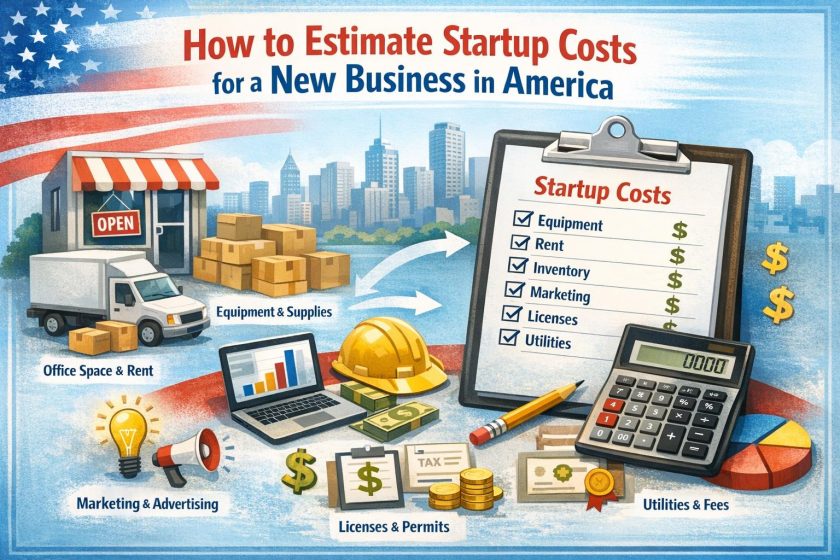
How to Estimate Startup Costs for a New Business in America

How to Estimate Startup Costs for a New Business in America

Understanding Startup Costs

Starting a new business in the United States requires a structured financial assessment well before products are sold or services are delivered. Among the earliest and most consequential tasks is identifying and calculating startup costs. These costs encompass all expenses incurred from the initial planning stages through the point at which the business begins generating consistent revenue. A precise understanding of these financial commitments supports informed decision-making, improves funding strategies, and reduces the likelihood of operational disruption.

Startup costs vary significantly depending on industry, geographic location, regulatory requirements, and the scale at which the business intends to launch. A home-based consulting firm may require modest capital, while a manufacturing operation, restaurant, or technology startup may demand substantial initial investment. Despite these differences, all businesses benefit from a disciplined approach to categorizing and forecasting startup expenditures.

The Scope of Startup Costs

Startup expenses extend beyond visible initial purchases such as equipment or inventory. They also include legal filings, professional services, deposits, early payroll obligations, marketing initiatives, and working capital reserves. Many new business owners underestimate the time between launch and consistent revenue generation. During this interval, the company must still cover recurring bills and operational expenses, which reinforces the importance of realistic forecasting.

In broad terms, startup costs can be divided into fixed costs and variable costs. Understanding the difference between these categories assists entrepreneurs in managing cash flow and constructing financial projections.

Fixed vs. Variable Costs

Fixed Costs

Fixed costs are expenses that remain consistent regardless of the level of business activity. Whether a company serves ten customers or one hundred, these costs generally remain stable over a defined period.

One significant fixed cost is rent or lease payments. Businesses operating from physical locations must account for monthly lease obligations, security deposits, and sometimes build-out expenses required to customize a premises. Commercial leases may include long-term commitments and additional costs such as property taxes, insurance contributions, and maintenance fees.

Utilities are another recurring fixed expense. Electricity, water, waste management, heating, cooling, and internet services often carry baseline charges independent of usage. While some variability can exist, a predictable minimum monthly amount is common.

Investment in technology also represents a substantial fixed outlay. This may include computers, servers, point-of-sale systems, specialized software licenses, cybersecurity tools, and cloud-based services. Many software subscriptions operate on monthly or annual contracts, establishing ongoing commitments that must be incorporated into forecasts.

Insurance is an essential and often mandatory cost. General liability insurance, professional liability coverage, workers’ compensation policies, product liability protection, and property insurance may be required depending on the nature of operations. Premium amounts are typically structured as recurring payments and are relatively predictable.

Additionally, administrative salaries for core management staff frequently function as fixed expenses in the startup phase. Even if business activity fluctuates, certain roles must be maintained to ensure continuity.

Variable Costs

Variable costs fluctuate in proportion to production levels, customer demand, or service output. These costs may rise as the business grows and decline during slower periods.

Marketing and advertising expenditures often vary depending on strategy and performance. Campaigns involving digital advertising, print materials, event sponsorships, or promotional discounts can be scaled up or down based on budget availability and marketing objectives. Early-stage businesses typically allocate flexible budgets to test customer acquisition channels.

For product-oriented enterprises, raw materials and inventory represent core variable costs. The volume of goods produced or purchased directly influences these expenses. Suppliers may offer volume-based pricing, which requires careful forecasting to avoid overstocking or shortages.

Labor costs can also be variable, particularly when staffing needs align with sales activity. Hourly employees, temporary staff, or contract workers may be scheduled according to demand levels. Training expenses may also fluctuate depending on hiring cycles.

Shipping charges, payment processing fees, packaging materials, and sales commissions further exemplify variable costs that change with transaction volume.

Industry-Specific Considerations

While fixed and variable classifications provide a foundational structure, industry-specific factors significantly shape total startup requirements. Each sector contains unique regulatory obligations, capital intensity levels, and time-to-profit expectations.

Service-Based Businesses

Service enterprises such as consulting firms, accounting practices, or marketing agencies generally require lower physical infrastructure investment. However, they may incur higher costs in professional licensing, liability insurance, and client acquisition. Reputation building through branding, portfolio development, and digital presence often becomes an early expenditure priority.

Retail and Hospitality

Retail stores and restaurants face substantial upfront investments in space preparation, fixtures, signage, furnishings, and inventory. Compliance with health codes, safety regulations, and accessibility standards may also add to build-out expenses. Additionally, these businesses commonly require point-of-sale systems and integrated inventory management software.

Manufacturing and Production

Manufacturing startups tend to be capital intensive. Equipment purchases, machinery installation, warehouse leasing, supply chain contracts, and quality control systems can represent significant expenditures. Environmental compliance, worker safety regulations, and industry certifications may further increase initial outlays.

Technology Startups

Technology-based enterprises may deploy most of their capital toward software development, technical talent recruitment, intellectual property protection, and server infrastructure. Although physical overhead might be limited, research and development expenses can be substantial, especially in highly competitive markets.

Legal and Regulatory Costs

Before commencing operations, businesses must meet federal, state, and local regulatory requirements. These costs should be included in startup calculations.

Incorporation fees, business registration charges, and filing costs vary by state and business structure. Forming a limited liability company, corporation, or partnership each carries distinct fee schedules. Many entrepreneurs also seek professional legal assistance to draft operating agreements, shareholder documents, or partnership contracts.

Licenses and permits can range from general business licenses to industry-specific certifications. Restaurants may require food handling permits and health inspections, while construction firms may need contractor licenses and bonding. Failure to budget for these regulatory obligations can delay launch.

Accounting services represent another startup investment. Initial consultations for tax planning, bookkeeping system setup, and payroll configuration ensure compliance and reduce administrative risk.

Pre-Operational Expenses

Many startup costs occur before official opening. These pre-operational expenses may include market research, feasibility studies, prototype development, branding design, and website creation. Travel expenses related to supplier negotiations or investor meetings may also arise.

Employee recruitment and training often begin before revenue generation. Advertising open positions, conducting interviews, performing background checks, and onboarding staff all involve financial commitment.

Deposits for leased premises, utility setup fees, and initial insurance premiums are commonly required in advance of operations. Businesses planning a soft launch or trial period should ensure that sufficient capital remains available for this transitional phase.

Working Capital Requirements

A critical but frequently underestimated component of startup costs is working capital. Working capital refers to the funds needed to support daily operations until the business achieves consistent cash inflow.

Even if physical setup is complete, a company may require several months to build a stable customer base. During this period, payroll, rent, marketing, and supplier payments continue. Accurately estimating the duration of this ramp-up phase reduces the risk of liquidity shortages.

Financial projections should include conservative revenue assumptions during early months. Overly optimistic sales forecasts can result in shortfalls that undermine operational continuity.

Estimating These Costs

Effective cost estimation combines research, documentation, and financial modeling. The process requires more than rough approximation; it demands structured evaluation.

Research and Industry Benchmarking

Entrepreneurs should examine comparable businesses within their industry and location. Public filings, trade publications, interviews with experienced operators, and local economic development agencies can provide insight into average expense levels. Differences in urban and rural operating environments may significantly influence rent, wages, and regulatory fees.

Cost estimates for supplies and equipment should be obtained directly from vendors whenever possible. Written quotations improve forecast accuracy and allow for negotiation.

Preparing a Detailed Cost Breakdown

A comprehensive expense ledger should categorize costs under fixed, variable, regulatory, administrative, marketing, and contingency headings. Each projected expense should include an explanation, estimated amount, and anticipated payment date. This level of detail enables better prioritization and financing strategies.

Separating essential expenditures from optional enhancements can also support phased implementation. If funding becomes limited, non-essential items may be deferred without interrupting core operations.

Cash Flow Forecasting

Beyond identifying startup expenditures, entrepreneurs should construct monthly cash flow statements covering at least the first year of operations. These statements estimate expected income, operating expenses, loan repayments, and capital expenditures. The projection should illustrate best-case, moderate, and conservative scenarios.

Sensitivity analysis may be applied to test how variations in sales volume or pricing affect cash reserves. This analytical approach highlights potential vulnerability points.

Use of Financial Tools

Startup budgeting software, accounting platforms, and industry-specific financial templates can assist in organizing data. While such tools provide structured frameworks, they should not replace independent judgment or professional consultation. Assumptions built into calculators may not reflect specific local conditions.

Financing Startup Costs

Once costs are estimated, entrepreneurs must determine how to fund them. Funding sources typically include personal savings, contributions from partners, bank loans, government-backed loans, angel investors, venture capital, or crowdfunding.

Each financing method carries implications for ownership structure, repayment obligations, and control. Debt financing requires reliable repayment capacity, whereas equity financing involves sharing future profits and decision-making authority. The chosen funding mix should align with projected cash flow stability and long-term strategic goals.

Importance of a Contingency Plan

Incorporating a contingency reserve is a prudent financial practice. Cost overruns, shipment delays, construction modifications, equipment failures, or regulatory changes can increase expenditures unexpectedly. Allocating approximately 10 to 20 percent of anticipated startup capital as a buffer supports operational stability.

Contingency planning also involves identifying alternative suppliers, backup financing options, and flexible staffing arrangements. Proactive preparation reduces the financial impact of unforeseen developments.

Common Cost Underestimations

Certain expenses are frequently undervalued in early projections. Marketing costs often exceed initial expectations, particularly in competitive markets where customer acquisition requires sustained outreach. Technology upgrades and cybersecurity measures may emerge as recurrent expenses rather than one-time purchases.

Insurance premiums may increase after risk assessments are conducted. Similarly, maintenance and repair costs for equipment or leased facilities may arise earlier than anticipated. Entrepreneurs should review estimates critically to avoid systematic bias toward lower figures.

Monitoring and Adjusting After Launch

Startup cost management does not conclude once the business opens. Ongoing monitoring ensures alignment between projections and actual expenditures. Accounting systems should record expenses in real time, enabling variance analysis.

Comparing projected versus actual spending reveals discrepancies that can inform operational adjustments. If marketing expenditures yield lower returns than expected, strategies may be revised. If certain fixed costs represent a disproportionate share of total revenue, renegotiation or relocation may be considered.

Regular financial reviews promote transparency and facilitate investor communication.

Tax Considerations

Certain startup expenses may be deductible under federal tax regulations, subject to specific limitations. Organizational costs, research expenditures, and some administrative fees may qualify for amortization or immediate deduction. Consulting with a qualified tax professional helps ensure compliance and optimal treatment of expenditures.

Failing to track these costs accurately can result in missed deductions or regulatory issues. Detailed documentation should therefore accompany all financial transactions from the earliest planning phases.

Long-Term Strategic Alignment

Startup cost planning should align with long-term operational objectives. Decisions made during the initial phase often influence scalability and cost efficiency for years to come. Selecting adaptable technology platforms, negotiating flexible lease terms, and building supplier relationships with growth capacity may reduce future expansion costs.

Conversely, minimizing startup spending without regard to long-term performance can generate inefficiencies. For example, purchasing low-quality equipment to conserve capital may increase maintenance expenses later. Balanced evaluation of cost and quality supports sustainable development.

Conclusion

Estimating startup costs is a foundational element of launching a business in the United States. A comprehensive evaluation includes fixed expenses such as rent, utilities, insurance, and administrative salaries, as well as variable expenses including marketing, inventory, and labor. Industry characteristics, regulatory obligations, and working capital requirements significantly influence total capital needs.

Accurate forecasting requires structured research, vendor consultation, detailed budgeting, and cash flow modeling. Securing appropriate financing and establishing a contingency reserve further strengthens financial preparedness. After launch, continuous monitoring and adjustment maintain alignment between projections and operational reality.

Careful planning does not eliminate risk, but it provides a measurable framework for decision-making. By approaching startup cost estimation with discipline and analytical rigor, entrepreneurs enhance the probability of achieving operational stability and sustained growth.

How to Protect Your Personal Assets When Starting a Business in the U.S.

How to Protect Your Personal Assets When Starting a Business in the U.S.

Understanding the Importance of Asset Protection

Starting a business requires capital, planning, and a willingness to assume risk. While entrepreneurs often focus on product development, marketing strategies, and financing, the legal and financial separation between personal and business assets is equally significant. Without appropriate safeguards, personal savings, real estate, investments, and other property may be exposed to claims arising from business activities.

Asset protection refers to the use of lawful strategies that reduce the risk of personal property being reached by business creditors. In the United States, business owners operate within a legal framework that distinguishes between individuals and business entities. When this distinction is properly established and maintained, it can limit the extent to which business liabilities affect personal wealth.

Business liabilities may arise from contract disputes, loan defaults, employee claims, customer injuries, or regulatory penalties. Even well-managed businesses can face litigation or financial pressure. Asset protection planning does not eliminate liability, but it can create barriers that prevent creditors from pursuing an owner’s personal assets beyond their investment in the business. Understanding these mechanisms at the outset can prevent costly complications later.

Choose the Right Business Structure

Selecting an appropriate business structure is one of the most consequential decisions a new business owner makes. The legal form of the enterprise defines how profits are taxed, how management operates, and how liability is distributed. While tax implications often dominate early considerations, liability protection should carry equal weight.

Business structures in the United States range from informal arrangements to complex corporate entities. Each structure carries different rules regarding personal responsibility for business debts and obligations. Choosing the wrong structure can expose personal assets unnecessarily, while the right structure can create a protective boundary between the owner and the enterprise.

Limited Liability Company (LLC)

A Limited Liability Company (LLC) is one of the most commonly used structures for small and medium-sized businesses. It combines elements of partnerships and corporations while offering liability protection to its members. In general, members are not personally liable for business debts solely by virtue of ownership. Creditors typically may pursue only the assets owned by the LLC, not the personal property of its members.

An LLC offers flexibility in taxation and management. It may be treated as a pass-through entity for federal tax purposes, meaning profits and losses are reported on the members’ personal tax returns. Alternatively, it may elect corporate taxation. This flexibility does not diminish the liability shield, provided that the entity is properly formed and maintained according to state law.

However, liability protection is not absolute. Members may still be personally liable if they personally guarantee loans, engage in fraudulent conduct, or fail to observe basic operational requirements. Courts may apply a legal doctrine known as “piercing the corporate veil” if the LLC is used improperly or if there is no meaningful separation between personal and business affairs. For this reason, proper administration remains critical.

Corporation

A corporation is a distinct legal entity owned by shareholders. It exists independently from its owners and continues to operate even if ownership changes. This separate legal identity forms the basis of the corporation’s liability protection. Shareholders are typically liable only to the extent of their investment in the company.

Corporations require more structured governance than LLCs. They must adopt bylaws, appoint directors, hold meetings, and maintain formal records. These formalities reinforce the corporation’s independent status. When properly maintained, a corporation offers a well-established and durable liability shield.

There are different types of corporations, including C corporations and S corporations, each with unique tax implications. The choice between them primarily affects taxation, not the availability of liability protection. As with LLCs, shareholders may lose protection if they personally guarantee obligations or fail to respect the entity’s separate existence.

Sole Proprietorship and Partnership

In contrast, sole proprietorships and general partnerships provide no separation between personal and business liability. A sole proprietorship is legally indistinguishable from its owner. All debts, obligations, and legal judgments against the business are the personal responsibility of the proprietor.

General partnerships similarly expose partners to personal liability, not only for their own actions but also for the actions of other partners conducted within the scope of the business. This shared liability can create significant exposure if disputes or claims arise.

Although these structures are simple to establish and administer, they offer no protective barrier. Business owners seeking asset protection often transition from sole proprietorships or general partnerships to LLCs or corporations to reduce exposure.

Maintain Proper Business Operations

Forming a legally protective entity is only the first step. The ongoing manner in which the business operates determines whether courts will respect that separation. Asset protection depends not merely on filing formation documents but on consistent, responsible management.

When business owners treat the entity as an extension of themselves rather than a separate organization, they risk undermining liability protection. Courts evaluate operational practices when deciding whether an owner should be personally responsible for business obligations.

Separate Personal and Business Finances

Maintaining distinct financial accounts is fundamental. The business should have its own bank accounts, credit lines, accounting records, and tax identification number. Personal expenses should not be paid directly from business accounts, and business revenues should not be deposited into personal accounts without proper documentation.

Clear accounting records demonstrate that the entity operates independently. Mixing funds, commonly referred to as commingling, may suggest that the business is merely an alter ego of the owner. This perception can support arguments for piercing the corporate veil.

Additionally, contracts should be executed in the name of the business, not in the personal name of the owner, unless a personal guarantee is intentionally provided. Communications, invoices, and marketing materials should reflect the entity’s name consistently.

Follow Corporate Formalities

Corporations must comply with statutory formalities such as adopting bylaws, issuing stock, appointing directors and officers, and holding annual meetings. Minutes should be documented and retained as part of corporate records. While LLCs generally face fewer mandatory formalities, they should maintain an operating agreement and document significant decisions.

These practices are not merely procedural; they reinforce the legal distinction between the owner and the entity. Even single-member LLCs benefit from documenting decisions and maintaining written agreements that outline governance and operational rules.

Failure to observe formalities can create the appearance that the business lacks independent existence. Courts look at factors such as capitalization, record-keeping, and adherence to governance procedures when evaluating liability disputes.

Consider Insurance Options

Entity formation provides structural protection, but insurance offers financial protection. Even when personal liability is limited, the financial stability of the business may be threatened by litigation or claims. Insurance serves as a risk transfer mechanism, shifting potential costs to an insurer in exchange for premiums.

Appropriate insurance coverage complements legal structures and reduces the likelihood that disputes will escalate into financial crises.

General Liability Insurance

General liability insurance typically covers claims of bodily injury, property damage, and certain advertising injuries. For businesses that interact with customers, maintain physical premises, or provide tangible products, this coverage is often fundamental.

For example, if a customer slips and falls on business property, general liability insurance may cover defense costs and damages up to policy limits. Without such coverage, the business might have to rely solely on its assets to satisfy a judgment.

Professional Liability Insurance

Professional liability insurance, sometimes called errors and omissions insurance, is particularly relevant for service providers. Consultants, accountants, healthcare professionals, and technology providers may face claims alleging negligence or inadequate performance.

Professional liability policies typically cover legal fees, settlements, and judgments arising from claims of professional error. Even unfounded claims can result in significant defense costs, making coverage valuable from a financial planning perspective.

Umbrella and Specialized Policies

Some businesses benefit from umbrella insurance policies that extend coverage beyond standard limits. Others may require industry-specific policies, such as product liability insurance, cyber liability coverage, or employment practices liability insurance.

Insurance does not replace careful entity management, but it adds a supplementary layer of protection that reduces financial exposure.

Implement Asset Protection Strategies

Beyond entity selection and insurance, additional strategies may help shield personal property. These strategies must be implemented proactively and in compliance with applicable law. Attempting to transfer assets after a claim arises can trigger fraudulent transfer rules, which allow courts to reverse improper transfers.

Asset protection planning is most effective when undertaken before liabilities materialize.

Homestead Exemption

Many states provide a homestead exemption that protects a portion of a primary residence’s equity from certain creditors. The scope of protection varies significantly by jurisdiction. Some states set modest limits, while others provide broader safeguards.

The exemption typically applies automatically if statutory conditions are met, though procedural steps may be required in certain jurisdictions. Understanding state-specific rules is important because the degree of protection can influence broader financial planning decisions.

Retirement Accounts

Qualified retirement accounts, such as 401(k) plans governed by federal law, generally receive strong protection from creditors. Individual Retirement Accounts (IRAs) often receive protection as well, although limits and rules vary.

Because retirement accounts are subject to statutory protections, allocating savings to these vehicles may serve dual purposes: long-term financial security and asset protection.

Trust Formation

Establishing a trust may offer an additional layer of protection, depending on its structure and governing law. Certain irrevocable trusts can remove assets from the grantor’s personal ownership, potentially shielding them from future creditors. The degree of protection depends on proper drafting, timing, and adherence to legal requirements.

Some jurisdictions recognize self-settled asset protection trusts, while others do not. Additionally, federal bankruptcy law imposes conditions and limitations. Professional guidance is essential when evaluating trust-based strategies, as improper implementation can invalidate protective intentions.

Use of Holding Companies

For businesses that own multiple assets or subsidiaries, forming separate legal entities to isolate liabilities can reduce overall exposure. For example, real estate assets may be placed in separate LLCs to prevent liabilities associated with one property from affecting others.

This structural segmentation does not eliminate risk but confines it within defined boundaries. Proper capitalization and administration of each entity remain necessary to maintain protection.

Personal Guarantees and Contractual Risk

Even with strong structural protections, personal guarantees can create direct liability. Lenders, landlords, and suppliers often require owners of small or closely held businesses to personally guarantee obligations. When a personal guarantee is signed, the owner agrees to be individually responsible if the business fails to meet its obligations.

Negotiating contract terms carefully can reduce unnecessary exposure. In some cases, it may be possible to limit guarantees by amount or duration. Understanding the implications of contractual commitments is a critical aspect of asset protection.

Consult Legal and Financial Experts

Asset protection planning involves interaction between business law, tax law, contract law, and estate planning principles. Attorneys can advise on entity formation, compliance, and trust design. Financial advisors and accountants can address tax efficiency and long-term planning considerations.

Professional guidance is particularly important when businesses operate across multiple states, engage in regulated industries, or manage substantial assets. Laws differ among jurisdictions, and strategies that are effective in one state may not apply in another.

Regular review is also advisable. As a business grows, expands into new markets, takes on investors, or acquires additional assets, its risk profile changes. Periodic assessments ensure that protective measures remain aligned with current operations.

Conclusion

Protecting personal assets while operating a business requires deliberate planning and disciplined execution. Selecting an appropriate legal structure establishes the foundation for liability limitation. Maintaining operational separation, observing formalities, and documenting financial transactions reinforce that protection. Insurance policies provide financial support when claims arise, and additional measures such as homestead exemptions, retirement account planning, trusts, and entity segmentation can enhance overall security.

No single strategy guarantees complete insulation from risk. However, a coordinated approach that integrates legal structure, sound governance, insurance coverage, and proactive planning significantly reduces exposure. By addressing asset protection early and revisiting it as circumstances evolve, business owners can pursue commercial objectives while preserving personal financial stability.

How to Start a Partnership Business in America

How to Start a Partnership Business in America

Understanding Partnership Business

A partnership is a business structure in which two or more individuals agree to manage and operate a venture according to mutually defined objectives and terms. Unlike corporations, which are recognized as separate legal entities distinct from their owners, partnerships are generally considered aggregates of their partners for many legal and tax purposes. The defining feature of a partnership is the voluntary association of individuals who combine resources, skills, or capital to conduct business and share profits. The specific rights and obligations of each partner are typically governed by a partnership agreement and by applicable state statutes.

Partnerships are widely used across the United States in industries ranging from professional services to real estate development and small-scale retail operations. The structure offers flexibility in management and taxation, making it an accessible option for entrepreneurs who wish to collaborate. However, this flexibility also requires a clear understanding of liability exposure, fiduciary duties, and long-term operational considerations.

Legal Foundation of Partnerships

Partnerships in the United States are primarily governed by state law. Most states have adopted a version of the Uniform Partnership Act (UPA) or the Revised Uniform Partnership Act (RUPA), which establishes default rules concerning the formation, operation, and dissolution of partnerships. These statutes provide guidance when a partnership agreement does not address a particular issue.

Under state law, a partnership may be formed without a written agreement and, in many cases, without formal registration, particularly in the case of a general partnership. Courts evaluate the existence of a partnership based on factors such as profit sharing, joint decision-making authority, and the intention of the parties to carry on as co-owners of a business for profit. Because partnerships may arise from conduct rather than explicit documentation, individuals working together in business should be aware of the legal implications of their arrangements.

Types of Partnerships

General Partnership: A general partnership is the most straightforward form of partnership. In this structure, all partners participate in the management of the business and share in profits and losses. Unless the partnership agreement specifies otherwise, profits are typically divided equally. A defining characteristic of the general partnership is unlimited personal liability. Each partner is personally responsible for the debts and obligations of the partnership, and one partner may be held liable for the actions of another partner conducted within the scope of the business. This mutual agency principle makes trust and transparency central to the operation of a general partnership.

Limited Partnership (LP): A limited partnership consists of at least one general partner and one or more limited partners. The general partner manages the business and bears unlimited personal liability for partnership debts. Limited partners, by contrast, contribute capital and share in profits but typically do not participate in day-to-day management. Their liability is limited to the amount of their investment, provided they refrain from exercising managerial control. Limited partnerships must register with the state and file appropriate formation documents. This structure is common in investment-oriented enterprises, including real estate and private equity ventures.

Limited Liability Partnership (LLP): A limited liability partnership provides liability protection to all partners. In an LLP, partners are not personally liable for certain debts or obligations of the partnership, particularly those arising from negligence or misconduct by other partners. The extent of liability protection varies by state. LLPs are frequently used by professional service firms such as law practices, accounting firms, and architectural groups, where partners wish to retain management participation while limiting exposure to personal liability. Registration with the state and ongoing compliance requirements are generally mandatory.

Forming a Partnership

The process of forming a partnership depends on the type selected and the jurisdiction in which the business will operate. Although a general partnership may arise informally, taking deliberate steps to structure the relationship is advisable to reduce misunderstandings and legal risk.

Choosing a Business Name

Selecting a business name involves reviewing state naming regulations, which may require the inclusion of specific identifiers such as “Limited Partnership” or “LLP” for certain structures. The chosen name must be distinguishable from existing registered entities. Even if registration is not mandatory for general partnerships, many partnerships register a trade name, sometimes referred to as a “doing business as” (DBA) name, to create clarity in commercial transactions and banking relationships.

Drafting a Partnership Agreement

A written partnership agreement is strongly recommended for all partnership types. This document serves as the governing framework for the relationship among partners. While state law provides default rules, a comprehensive agreement allows partners to tailor provisions according to their preferences. The agreement typically addresses capital contributions, allocation of profits and losses, management authority, voting procedures, dispute resolution mechanisms, procedures for admitting new partners, and guidelines for dissolution.

In addition, the agreement can clarify expectations regarding time commitment, compensation beyond profit sharing, and restrictions on competing activities. By defining these terms at the outset, partners reduce the risk of disputes and provide a predictable structure for decision-making.

Registration and Compliance

Limited partnerships and LLPs must file formation documents with the appropriate state authority, commonly the Secretary of State. These filings may include a certificate of limited partnership or a statement of qualification. General partnerships are generally not required to file formation documents, but may need to register for tax purposes or local business licenses.

Most partnerships obtain an Employer Identification Number (EIN) from the Internal Revenue Service for tax reporting and banking purposes. Even partnerships without employees often require an EIN to open financial accounts. Compliance obligations may also include annual reports, state fees, and maintenance of a registered agent for service of process.

Licenses, Permits, and Regulatory Requirements

Depending on the industry, partnerships may need federal, state, or local licenses. Professional partnerships must comply with regulatory rules governing licensing standards for individual practitioners. Businesses engaged in specialized sectors such as construction, healthcare, or food services may face additional oversight. Compliance with zoning regulations and sales tax registration may also be necessary. These obligations are separate from the formation of the partnership itself and must be addressed to operate lawfully.

Financial Separation and Recordkeeping

Maintaining accurate financial records is essential for legal, tax, and managerial purposes. Opening a dedicated business bank account helps distinguish partnership finances from personal funds. This separation supports transparency among partners and facilitates accurate tax reporting. Partnerships should establish accounting procedures that track capital accounts, distributions, and expenses in a consistent manner. Professional accounting assistance may be appropriate, particularly for complex operations.

Management and Decision-Making

In a general partnership, each partner typically has equal authority to act on behalf of the business unless the agreement states otherwise. This principle of mutual agency allows partners to bind the partnership through contracts and other transactions conducted in the ordinary course of business. While efficient, this authority also creates risk if one partner acts imprudently.

Limited partnerships differentiate management authority by restricting it to general partners. Limited partners who assume management responsibilities risk forfeiting liability protection. In an LLP, management structures may resemble those of a general partnership but with liability safeguards in place.

Partnership agreements often specify voting thresholds for significant decisions, such as incurring substantial debt, admitting new partners, or selling major assets. Clearly defined governance processes contribute to operational stability and reduce ambiguity.

Fiduciary Duties and Ethical Obligations

Partners owe fiduciary duties to one another and to the partnership. These duties generally include the duty of loyalty and the duty of care. The duty of loyalty requires partners to act in the best interest of the partnership, avoid conflicts of interest, and account for any benefit derived from partnership opportunities. The duty of care obligates partners to refrain from engaging in grossly negligent or reckless conduct.

Partnership agreements may modify certain aspects of fiduciary duties within statutory limits, but they cannot entirely eliminate the obligation to act in good faith. Breach of fiduciary duty may expose a partner to legal liability and financial damages.

Capital Contributions and Profit Allocation

Partners contribute capital in various forms, including cash, property, services, or a combination thereof. The agreement should establish how contributions are valued and recorded in each partner’s capital account. Capital accounts reflect each partner’s financial stake and are adjusted annually to account for profits, losses, and distributions.

Profit and loss allocation can be structured in multiple ways. While equal distribution is the statutory default in many jurisdictions, partners may choose alternative formulas based on capital contributions or other agreed criteria. Proper documentation of allocation methods is important for both internal accounting and tax reporting purposes.

Tax Obligations

Partnerships are generally treated as pass-through entities for federal income tax purposes. The partnership itself does not pay income tax. Instead, it files an informational return, typically Form 1065, reporting the partnership’s income, deductions, gains, and losses. Each partner receives a Schedule K-1, which details the partner’s share of taxable items.

Partners report income or loss allocations on their personal tax returns, regardless of whether distributions were actually received. This feature distinguishes partnerships from some other structures and requires careful planning to ensure adequate liquidity for tax payments. Partnerships may also be subject to state and local taxes, employment taxes if they have employees, and industry-specific taxes depending on the nature of operations.

Self-Employment Taxes

In many partnerships, particularly general partnerships and certain LLPs, partners are considered self-employed individuals rather than employees. As a result, they may be responsible for self-employment taxes on their distributive share of earnings. Limited partners may receive different treatment under federal tax rules, depending on the characterization of their participation. Professional tax guidance is often warranted to ensure compliance.

Liability Considerations

Liability exposure represents one of the most significant distinctions between partnership forms. In a general partnership, personal assets of each partner may be used to satisfy partnership debts. This exposure underscores the importance of business insurance, including general liability and professional liability coverage where applicable.

Limited partnerships and LLPs reduce personal exposure under certain conditions, but they do not eliminate all forms of liability. Partners remain responsible for their own misconduct and may face personal liability for personally guaranteed debts. Understanding these distinctions is critical when evaluating risk tolerance and selecting a partnership structure.

Admission and Withdrawal of Partners

Partnership agreements typically outline the process for admitting new partners. Admission may require unanimous consent or a specified voting threshold. The agreement may also describe required capital contributions and adjustments to profit-sharing arrangements following admission.

Withdrawal events can occur voluntarily or under circumstances such as retirement, disability, or breach of agreement. Clearly defined buyout provisions help manage these transitions. Valuation methods for determining a departing partner’s interest may include predetermined formulas or independent appraisal mechanisms. Thoughtful planning in this area contributes to continuity and reduces the likelihood of disputes.

Dissolution and Winding Up

A partnership may dissolve voluntarily by agreement of the partners, upon the completion of a specific project, or due to external circumstances such as bankruptcy. In some jurisdictions, certain events automatically trigger dissolution unless the partnership agreement provides otherwise.

The winding-up process involves settling debts, liquidating assets, and distributing remaining proceeds according to capital accounts and agreed priorities. Proper completion of this process is necessary to close out legal obligations and prevent future claims. Filing appropriate termination documents with state authorities may also be required for registered partnerships.

Advantages and Limitations

Partnerships offer several structural advantages, including flexibility in internal governance and pass-through taxation. They allow for shared decision-making and pooling of expertise without the formalities associated with corporate governance. Formation can be relatively straightforward compared to other entity types.

However, potential limitations include exposure to personal liability in certain forms, possible disagreements among partners, and challenges in raising large amounts of capital compared to corporations. The long-term success of a partnership often depends on effective communication, clear documentation, and alignment of strategic objectives.

Conclusion

A partnership is a versatile and widely used business structure in the United States, characterized by shared ownership, collaborative management, and pass-through taxation. Whether structured as a general partnership, limited partnership, or limited liability partnership, each form carries distinct legal and financial implications. Establishing a well-drafted partnership agreement, complying with registration and licensing requirements, and understanding tax and liability considerations are fundamental steps in creating a stable operational foundation.

Careful planning at formation and ongoing attention to governance, fiduciary duties, and financial management contribute to sustainable operations. While partnerships offer flexibility and accessibility, they require deliberate organization to balance opportunity with risk. Consulting legal and financial professionals can support informed decision-making and ensure alignment with applicable state and federal regulations.

How to Start a Corporation in the United States

How to Start a Corporation in the United States

Understanding the Basics

Starting a corporation in the United States involves a structured legal process governed primarily by state law, along with certain federal requirements. A corporation is recognized as a separate legal entity from its owners, who are referred to as shareholders. This separation provides limited liability protection, meaning shareholders are generally not personally responsible for the debts and obligations of the corporation beyond their investment.

Corporations are widely used for businesses that plan to raise capital, expand operations, or eventually offer shares to investors. The corporate structure also provides continuity, as the entity continues to exist even if ownership or management changes. However, these advantages come with formalities, record-keeping obligations, and regulatory compliance requirements that distinguish corporations from sole proprietorships and limited liability companies.

Before beginning the incorporation process, it is important to understand that rules vary by state. While the general process is similar nationwide, each state has its own statutes, filing fees, reporting requirements, and tax regulations. Careful planning at the outset can reduce administrative burdens and legal complications later.

Choose a Corporate Name

Choosing a name is the first formal step in forming a corporation. The selected name must comply with the naming rules of the state in which the corporation will be formed. Most states require that a corporate name include a designator such as “Corporation,” “Incorporated,” “Company,” or an accepted abbreviation such as “Inc.” or “Corp.” These identifiers signal to the public that the business operates as a corporation.

The name must be distinguishable from other registered business entities within the same state. State filing offices maintain searchable databases that allow prospective founders to check availability. Conducting a name search helps prevent rejection of incorporation documents and reduces the risk of disputes.

In addition to state-level checks, founders should consider federal and state trademark laws. Even if a name is available for registration with a state agency, it may still infringe on an existing trademark. Searching records maintained by the U.S. Patent and Trademark Office and reviewing common law trademark usage can help identify potential conflicts. If long-term branding is important, applying for federal trademark protection may provide additional safeguards.

It is also prudent to verify the availability of an appropriate domain name and consistent branding across digital platforms. Although not legally required, aligning the corporate name with online presence supports business operations and marketing.

Identify the State of Incorporation

Corporations may be formed in any U.S. state, regardless of where the owners reside. Many small businesses incorporate in the state where they conduct most of their operations. However, certain states, notably Delaware, Nevada, and Wyoming, are often chosen because of their established corporate statutes and specialized courts.

Delaware is frequently selected due to its well-developed body of corporate case law and the Court of Chancery, which focuses on business disputes. These features can provide predictability in legal matters. Larger corporations, especially those seeking outside investment, often prefer Delaware for this reason.

Nevertheless, incorporating outside the state where the business physically operates may lead to additional administrative steps. If a corporation conducts business in a state other than its state of incorporation, it typically must register as a “foreign corporation” in that state. This process involves filing additional paperwork and paying fees in both states. The decision should therefore account for resident shareholders, the primary location of business operations, expected revenue, and tax considerations.

State corporate income taxes, franchise taxes, annual fees, and reporting requirements vary significantly. Evaluating these factors before filing can help minimize ongoing compliance costs and simplify administration.

Prepare and File Articles of Incorporation

The formal creation of a corporation occurs when the Articles of Incorporation are filed and accepted by the designated state authority, typically the Secretary of State. This document, sometimes referred to as a Certificate of Incorporation, establishes the corporation’s legal existence.

The Articles of Incorporation generally include the corporate name, the principal business address, and the name and address of the registered agent. The document also specifies the corporation’s purpose. Many states permit a general purpose clause, allowing the corporation to engage in any lawful business activity. Others may require a more specific description for regulated industries.

Another key component is the statement of authorized shares. Corporations must declare the number of shares they are authorized to issue and may specify different classes of stock, such as common and preferred shares. Describing these classes in the Articles lays the groundwork for ownership structure and investor rights. If multiple classes are created, the rights and preferences of each class should be clearly defined.

A filing fee must accompany the Articles of Incorporation. Once approved, the state issues a certificate or acknowledgment confirming formation. At this point, the corporation exists as a legal entity, although it must still complete several organizational steps before commencing full operations.

Designate a Registered Agent

Every corporation must designate a registered agent within its state of incorporation. A registered agent is responsible for receiving official legal documents, including service of process if the corporation is sued, as well as government correspondence and compliance notices.

The registered agent must maintain a physical address within the state and be available during normal business hours. The agent may be an individual resident, such as an officer or director, or a professional registered agent service company authorized to conduct business in the state.

Designating a reliable registered agent is important for maintaining good standing. Failure to receive and respond to official notices can result in missed deadlines, default judgments in legal proceedings, or administrative dissolution. Many corporations choose professional services to ensure consistent availability and proper handling of documents.

Create Corporate Bylaws

Corporate bylaws are internal rules governing the management and operation of the corporation. Although bylaws are not typically filed with the state, they are foundational to corporate governance. They define procedures for decision-making, clarify the authority of directors and officers, and address administrative matters.

Bylaws usually specify how shareholder and director meetings are conducted, including notice requirements, quorum thresholds, and voting procedures. They outline the number and qualifications of directors, their terms of service, and how vacancies are filled. The bylaws also define officers’ roles and responsibilities, such as those of the president, secretary, and treasurer.

Adoption of comprehensive bylaws promotes consistency and reduces uncertainty. In the event of disagreements among shareholders or directors, written bylaws provide a reference point for resolving disputes. Financial institutions and investors may also request copies of bylaws before engaging with the corporation.

Bylaws can be amended as the corporation evolves. Amendment procedures are usually described within the bylaws themselves, specifying whether approval is required from the board of directors, shareholders, or both.

Hold an Organizational Meeting

After the Articles of Incorporation are filed, the incorporators or initial directors conduct an organizational meeting. This meeting marks the transition from formation to operational governance. During this session, the initial board of directors is confirmed or elected if not already named in the Articles.

Key actions typically occur at this meeting. The board adopts the corporate bylaws, authorizes the issuance of shares, appoints corporate officers, and approves the form of stock certificates if certificates will be used. The board may also adopt a corporate seal, designate a fiscal year, and approve initial contracts or banking resolutions.

Minutes of the organizational meeting should be prepared and maintained in the corporate records book. Accurate documentation of these early decisions demonstrates adherence to corporate formalities, which supports the corporation’s limited liability protection.

Issue Stock

Issuing stock establishes ownership in the corporation. Shares represent units of interest held by shareholders. The board of directors authorizes the issuance of shares in exchange for consideration, which may include cash, property, services, or a combination of these.

Corporations must maintain detailed records of stock issuance, including the names of shareholders, the number of shares issued, and the date of issuance. Some corporations issue physical certificates, while others use electronic records. Regardless of format, maintaining accurate records is essential for legal and tax purposes.

Different classes of stock may confer different rights. Common stock typically carries voting rights and the potential for dividends. Preferred stock may offer priority in dividend payments or liquidation proceeds, often without voting rights. The structure chosen should align with the corporation’s capital strategy and investor expectations.

Compliance with federal and state securities laws is critical when offering shares. Even closely held corporations must ensure that stock issuance qualifies for an exemption from registration or complies with applicable securities regulations. Failure to observe these requirements can lead to penalties and investor disputes.

Obtain Necessary Permits and Licenses

Incorporation does not, by itself, authorize a corporation to conduct all types of business. Many industries and activities require specific permits or licenses at the federal, state, or local level. These requirements depend on the nature of the business and its geographic location.

Common examples include professional licenses for regulated occupations, health permits for food-related businesses, and zoning approvals for commercial property use. Businesses engaged in manufacturing, transportation, financial services, or import and export may be subject to additional regulatory oversight.

Obtaining the appropriate licenses ensures lawful operation and reduces the risk of fines or forced shutdowns. Requirements may evolve over time, so periodic review of compliance obligations is advisable.

Comply with State and Federal Regulations

Forming a corporation is not a one-time event but the beginning of ongoing compliance responsibilities. Most states require corporations to file annual or biennial reports that update information such as the corporation’s address, registered agent, and officers. Associated filing fees must be paid to maintain good standing.

Corporations are also subject to tax obligations at the federal and state levels. After formation, the corporation typically applies for an Employer Identification Number from the Internal Revenue Service. This number is necessary for filing tax returns, opening bank accounts, and hiring employees.

Depending on its structure, a corporation may be taxed as a C corporation or elect to be treated as an S corporation if eligibility requirements are met. C corporations are taxed separately from their shareholders, while S corporations allow income and losses to pass through to shareholders for tax purposes. The choice affects reporting requirements and tax liabilities.

Maintaining corporate formalities is essential for preserving limited liability protection. This includes holding regular board and shareholder meetings as required, documenting significant decisions in written minutes, maintaining separate financial accounts, and avoiding commingling personal and corporate funds.

Failure to comply with reporting requirements, tax payments, or record-keeping obligations can result in penalties, loss of good standing, or administrative dissolution. In serious cases, courts may disregard the corporate entity if formalities are ignored, potentially exposing shareholders to personal liability.

Careful attention to each stage of formation and ongoing administration helps establish a stable and compliant corporate structure. Prospective founders often consult attorneys, accountants, or professional service providers to ensure that legal and financial requirements are met. State government agencies also provide detailed guidance and standardized forms to assist in navigating the incorporation process.

How to Start an LLC in America

How to Start an LLC in America

Understanding an LLC

A Limited Liability Company (LLC) is a legal business structure that combines elements of corporations, partnerships, and sole proprietorships. It is designed to provide flexibility in management and taxation while offering personal liability protection to its owners, who are referred to as members. The defining characteristic of an LLC is that it generally shields members from personal responsibility for business debts and legal obligations. In practical terms, this means that creditors of the business typically cannot pursue the personal assets of individual members to satisfy company liabilities.

LLCs have become one of the most commonly used business structures in the United States due to their adaptability. They are suitable for single-owner businesses as well as multi-member enterprises, and they can be used for small local operations or larger ventures with numerous stakeholders. While state laws govern the formation and operation of LLCs, the general principles are consistent across jurisdictions.

Understanding how an LLC functions requires familiarity with both its legal foundation and its operational flexibility. Unlike corporations, LLCs are usually not required to adopt a formal governance structure involving a board of directors or annual shareholder meetings. At the same time, unlike sole proprietorships and general partnerships, LLCs exist as separate legal entities distinct from their owners. This separation underpins the liability protection that the structure provides.

Key Characteristics of an LLC

An LLC is considered a hybrid entity because it merges corporate-style liability protection with partnership-style taxation options. By default, a single-member LLC is treated as a “disregarded entity” for federal income tax purposes, meaning profits and losses are reported directly on the owner’s personal tax return. A multi-member LLC is generally taxed as a partnership, with profits and losses passing through to members. However, an LLC may also elect to be taxed as an S corporation or C corporation if it meets the necessary requirements and doing so provides a strategic tax advantage.

Another central feature of an LLC is its operational flexibility. Members may choose between a member-managed structure, in which all members participate in daily management, and a manager-managed structure, in which designated managers handle operations. These managers may or may not be members of the LLC. This flexibility enables owners to tailor governance to match the size, purpose, and complexity of the business.

The personal liability protection associated with LLCs is not absolute. Courts may “pierce the corporate veil” if members fail to maintain separation between personal and business finances or engage in fraudulent or improper conduct. Maintaining proper records, using separate bank accounts, and complying with statutory requirements are essential to preserving liability protection.

Advantages and Considerations

The appeal of forming an LLC often lies in its balance of simplicity and protection. Compared to corporations, LLCs typically involve fewer administrative formalities. There is often less paperwork, and ongoing compliance requirements are generally less burdensome. In addition, pass-through taxation can prevent the double taxation that applies to traditional C corporations, where income is taxed at both the corporate and shareholder levels.

However, certain considerations should be examined before selecting this structure. Some states impose annual franchise taxes or fees on LLCs regardless of profitability. Self-employment taxes may apply to members who actively participate in the business. In addition, raising capital can sometimes be more complex for LLCs than for corporations, particularly when seeking institutional investors who prefer corporate stock structures.

Careful evaluation of business goals, tax implications, and administrative responsibilities is advisable before forming an LLC. Professional guidance from legal and financial advisors may assist in determining whether this structure aligns with long-term objectives.

Step 1: Choose a Suitable Name

The formation process begins with selecting a compliant and distinguishable business name. Each state maintains regulations governing LLC naming conventions. Generally, the name must include a designator such as “Limited Liability Company,” “LLC,” or “L.L.C.” This designation informs the public that the business operates as a limited liability entity.

The chosen name must be distinguishable from existing registered entities within the state. State business filing offices typically provide searchable databases that allow prospective owners to determine availability. It is advisable to verify that the name does not infringe upon registered trademarks or service marks, which may be governed by federal law.

Some businesses also consider branding implications when selecting a name. This can include the availability of domain names, consistency across marketing materials, and future expansion plans. While naming is partly a creative process, it is also a legal step that must comply strictly with state statutes.

Step 2: Appoint a Registered Agent

Every LLC must designate a registered agent in the state of formation. The registered agent acts as the official recipient of legal documents, including service of process, government correspondence, and compliance notices. The agent must maintain a physical street address within the state and be available during normal business hours.

An individual member may serve as the registered agent, or the LLC may appoint a professional registered agent service. While self-representation is permitted in many states, using a professional service may enhance privacy and reliability. The registered agent’s address becomes part of the public record, and consistent availability is essential to ensure that important documents are received promptly.

Failure to maintain an active registered agent can result in administrative penalties, including potential dissolution of the LLC. Therefore, it is important to update state records promptly if the agent’s contact information changes.

Step 3: File Articles of Organization

To formally establish the LLC, organizers must file Articles of Organization—sometimes known as a Certificate of Formation or Certificate of Organization—with the appropriate state agency. This filing serves as the official creation document and provides essential information about the entity.

Typically, the Articles of Organization include the LLC’s name, principal business address, registered agent information, and management structure. Some states may require additional disclosures, such as the purpose of the business or the duration of the LLC. Filing fees vary significantly depending on the jurisdiction.

Once approved, the state issues confirmation of formation. From that point forward, the LLC exists as a legal entity separate from its members. It may enter into contracts, acquire property, and conduct business in its own name.

Step 4: Create an Operating Agreement

An Operating Agreement is a foundational internal document that governs the rights and responsibilities of members. Although not mandated in every state, it is strongly recommended for both single-member and multi-member LLCs. This agreement clarifies decision-making processes, ownership percentages, capital contributions, and procedures for admitting new members.

In multi-member LLCs, the Operating Agreement typically outlines voting rights and profit distribution formulas. It may also address dispute resolution mechanisms and buyout provisions in the event that a member withdraws or passes away. By establishing these terms in writing, members reduce the likelihood of misunderstandings and legal conflicts.

For single-member LLCs, the Operating Agreement serves another practical purpose: demonstrating the separate legal identity of the entity. Even though there is only one owner, documenting operational procedures reinforces the distinction between personal and business activities.

Step 5: Obtain an EIN

An Employer Identification Number (EIN) is issued by the Internal Revenue Service and functions as the business’s federal tax identification number. Even if an LLC has no employees, obtaining an EIN is generally advisable. Financial institutions often require it to open a business bank account, and it may be necessary for certain licensing or tax registrations.

The EIN is also used when filing federal and, in many cases, state tax returns. For LLCs with employees, it is mandatory. The application process is typically straightforward and can be completed through official government channels without cost.

Maintaining accurate tax records and understanding reporting obligations is a critical component of compliance. Depending on the chosen tax classification, filing requirements and payment schedules may vary.

Additional Licensing and Permits

Forming an LLC does not automatically grant authority to operate in regulated industries. Businesses may require local, state, or federal licenses depending on their activities and location. Examples include professional licenses, health department permits, or industry-specific certifications.

Municipal governments often require general business licenses, and zoning laws may affect where operations can take place. Compliance with these regulations is necessary to avoid penalties or operational interruptions.

Compliance and Ongoing Requirements

After formation, LLCs must satisfy ongoing compliance obligations. Most states require the filing of periodic reports—often annually or biennially—that confirm current contact information and management details. These filings typically involve a fee.

Some jurisdictions impose annual franchise taxes or minimum business taxes. Even if the LLC generates little or no income, these obligations may still apply. Missing reporting deadlines can result in late fees, administrative dissolution, or loss of good standing status.

Maintaining accurate financial records is also essential. Although LLCs generally face fewer formal requirements than corporations, prudent recordkeeping supports tax reporting and reinforces liability protection. This includes maintaining separate bank accounts and documenting major decisions.

Tax Flexibility and Strategic Elections

One of the distinctive features of an LLC is its flexibility in federal taxation. By default, income passes directly to members, avoiding entity-level taxation. However, some businesses may benefit from electing corporate taxation, particularly if reinvestment of profits or payroll tax strategies align with financial goals.

Electing S corporation status can sometimes reduce self-employment tax liability for active members, provided reasonable compensation rules are observed. Conversely, C corporation taxation may benefit companies seeking outside investment or long-term profit retention.

The appropriateness of any tax election depends on revenue projections, compensation structures, and expansion plans. Consultation with qualified tax professionals is advisable when evaluating these options.

Dissolution and Winding Up

An LLC may eventually cease operations voluntarily or involuntarily. Dissolution procedures are usually outlined in the Operating Agreement and governed by state law. The process often involves member approval, settling outstanding debts, distributing remaining assets, and filing formal dissolution documents with the state.

Properly winding up activities ensures that liabilities are addressed and that members formally conclude the entity’s legal existence. Failure to complete dissolution procedures can result in ongoing tax assessments or reporting requirements.

Resources for Further Assistance

Entrepreneurs forming an LLC may seek assistance from attorneys, accountants, or specialized business formation services. Professional advisors can provide tailored guidance on compliance, taxation, and risk management. Online formation services can assist with document preparation and filing, although they do not typically replace individualized legal counsel.

Because LLC laws vary by state and evolve over time, reviewing current statutes and official guidance is essential. Careful planning at the formation stage contributes to operational stability and regulatory compliance in the future.

Conclusion

The Limited Liability Company structure offers a balanced framework for conducting business with personal liability protection and operational flexibility. By following required formation steps—selecting a compliant name, appointing a registered agent, filing Articles of Organization, drafting an Operating Agreement, and obtaining an EIN—entrepreneurs establish a legally recognized entity capable of independent operation.

Ongoing compliance, sound financial management, and informed tax decisions sustain the integrity of the LLC over time. While the structure simplifies many aspects of business ownership, deliberate organization and adherence to state regulations remain central to preserving its benefits.

How to Start a Sole Proprietorship in the United States

How to Start a Sole Proprietorship in the United States

Understanding Sole Proprietorship

A sole proprietorship is the most straightforward and widely used form of business organization in the United States. It is an unincorporated business owned and operated by one individual. In this structure, the business and the owner are legally the same entity. There is no separate legal identity created by filing formation documents with the state, as is required for corporations or limited liability companies. Because of this simplicity, many entrepreneurs begin their commercial activities as sole proprietors, particularly in the early stages of a venture.

This business model is defined by the absence of a legal distinction between the owner and the enterprise. The owner is entitled to all profits generated by the business, but is also personally responsible for all debts, contractual obligations, and liabilities. The structure is commonly used for small retail operations, professional services, freelance work, consulting practices, and home-based enterprises. While it requires minimal formalities to begin operations, it still carries significant legal and financial implications that should be clearly understood before proceeding.

Legal Characteristics of a Sole Proprietorship

A sole proprietorship comes into existence automatically when an individual begins conducting business activities for profit without forming another recognized legal structure. There is no requirement to file articles of incorporation or organization to create it. The owner and the business are treated as one and the same for legal and tax purposes.

Because there is no separate legal entity, the owner holds title to all assets of the business in their personal name. Contracts entered into for the business are agreements between the owner and the other party. Debts incurred are personal obligations of the proprietor. If the business is sued, the owner is personally named in the lawsuit. Similarly, if the business owes money and cannot pay, creditors may pursue the owner’s personal assets, subject to applicable exemption laws.

The absence of separate legal status also means that the life of the business is tied directly to the life and decisions of the owner. If the owner ceases operations, retires, or passes away, the sole proprietorship ends unless steps are taken to transfer assets and continue operations in another legal form.

Advantages and Disadvantages

Advantages: The principal advantages of a sole proprietorship are ease of formation, direct control, and simplified tax treatment. Formation does not typically require formal registration with the state beyond local licenses or permits. The owner has complete authority over decision-making, including pricing, hiring, and strategic direction. Profits are not subject to separate corporate taxation. Instead, income and expenses are reported on the owner’s individual income tax return, avoiding the potential double taxation associated with certain corporate structures.

Administrative requirements are generally limited. There are no mandatory annual meetings, no board of directors, and no corporate record-keeping requirements imposed by statute. This simplicity reduces operational complexity and can reduce costs during the early stages of a business.

Disadvantages: The most significant disadvantage is unlimited personal liability. Because the owner and the business are legally indistinguishable, personal assets such as savings accounts, vehicles, and real property may be exposed to claims arising from business debts or legal judgments. This risk can be substantial in industries with higher exposure to contractual disputes or tort liability.

Another disadvantage is the potential difficulty in raising capital. Sole proprietors cannot issue stock or ownership interests to investors. Funding typically comes from personal savings, personal loans, lines of credit, or reinvested profits. Lenders may require personal guarantees, further reinforcing the exposure of personal assets.

Continuity is also limited. Since the business does not exist independently of the owner, succession planning can be more complex compared to entities that allow ownership interests to be transferred more easily. Additionally, some customers, vendors, or financial institutions may perceive incorporated entities as more stable or established, which can influence business relationships.

Distinction from Other Business Structures

It is important to distinguish a sole proprietorship from other common business forms. A limited liability company (LLC) and a corporation create separate legal entities that shield owners from personal liability for business debts, subject to certain exceptions. Partnerships, while also potentially unincorporated, involve two or more owners and may introduce shared liability.

In comparison, the sole proprietorship does not provide liability protection, does not require formal governance structures, and involves only one owner. The administrative simplicity and tax transparency make it accessible, but the trade-off is personal exposure to risk.

Steps to Start a Sole Proprietorship

Although a sole proprietorship can arise automatically when business activity begins, formalizing certain aspects of the operation is necessary to comply with state and local regulations. The precise requirements vary depending on location and industry.

Step 1: Choose a Business Name

Selecting a business name is typically the first formal step. An owner may operate under their personal legal name, such as “Jane Smith,” without additional registration beyond required licenses. However, many entrepreneurs prefer to operate under a trade name to distinguish the business identity from their personal identity.

If a trade name is used that does not include the owner’s full legal name, it is commonly referred to as a “Doing Business As” (DBA) or fictitious business name. Before adopting a name, it is advisable to verify that it is not already in use by another business within the same jurisdiction. State and county databases often provide searchable records. Conducting a name search reduces the risk of conflicts and potential trademark disputes.

Consideration should also be given to whether the chosen name may later be used if the business structure changes to an LLC or corporation. Checking availability across entity filings may help maintain consistency.

Step 2: Register Your Business Name

If operating under a DBA, registration is usually required by state or local authorities. The process often involves filing a form with the county clerk or Secretary of State and paying a filing fee. Some jurisdictions require publication of the fictitious name in a local newspaper for a specified period.

The purpose of registering a DBA is to provide transparency to the public regarding the identity of the person behind the business name. It does not create a separate legal entity, nor does it provide liability protection. Instead, it ensures that customers and creditors can identify the responsible party.

Once approved, the registered DBA may be used for contracts, marketing materials, signage, and banking purposes. Renewal requirements vary, and failure to maintain the registration may result in penalties.

Step 3: Obtain Necessary Licenses and Permits

Even though forming a sole proprietorship is simple, compliance with regulatory requirements remains necessary. Many businesses require local business licenses issued by a city or county government. Certain professions, such as contractors, real estate agents, healthcare providers, and cosmetologists, are subject to state-level licensing boards.

In addition to general business licenses, businesses may need zoning permits, health department permits, sales tax permits, or federal registrations, depending on their activities. For example, a restaurant would typically require health inspections and food handling permits. A business selling taxable goods must obtain a sales tax permit and collect applicable taxes from customers.

Failure to obtain required permits can result in fines, forced closure, or legal action. Therefore, reviewing local and state regulations before commencing operations is an important step.

Step 4: Set Up Financial Accounts

Although the law does not mandate a separate bank account for a sole proprietorship, establishing one is considered a sound financial practice. A dedicated business account simplifies bookkeeping, supports accurate record-keeping, and facilitates tax preparation.

Operating a business through a personal account can complicate the tracking of business expenses and income. Errors in record-keeping may increase the risk of inaccuracies in tax reporting. A separate account also enhances professional presentation when dealing with clients and vendors.

In addition to a business checking account, some proprietors establish a business savings account to set aside funds for estimated taxes or future expenses. Accounting software or professional bookkeeping services may further support financial management.

Step 5: Understand Tax Obligations

Taxation of a sole proprietorship is straightforward but requires careful record-keeping. The business itself does not pay income taxes as a separate entity. Instead, the owner reports business income and expenses on Schedule C, which is filed with their individual federal income tax return.

Net profit from the business is subject to ordinary income tax rates. In addition, sole proprietors must pay self-employment tax, which covers Social Security and Medicare contributions. Employers and employees in traditional employment arrangements share these taxes; in a sole proprietorship, the owner is responsible for the full amount.

Depending on the level of income, the proprietor may be required to make quarterly estimated tax payments to the Internal Revenue Service and, where applicable, to state tax authorities. Failure to make timely payments can result in penalties.

Record-keeping for tax purposes includes maintaining receipts, invoices, mileage logs, payroll documentation if employees are hired, and documentation of deductible expenses. Common deductions may include office expenses, supplies, equipment depreciation, and a portion of home office expenses if specific criteria are met.

Liability and Risk Management

Because unlimited personal liability is a defining characteristic of a sole proprietorship, managing risk is essential. One method of mitigating exposure is purchasing appropriate insurance coverage. General liability insurance may cover bodily injury or property damage claims. Professional liability insurance, also known as errors and omissions insurance, may protect service providers against claims of negligence or inadequate performance.

Property insurance can cover equipment and inventory, while commercial auto insurance may be required if vehicles are used for business purposes. Insurance does not eliminate liability but can provide financial resources to address claims.

Risk management also involves careful contract drafting, compliance with regulations, and maintaining accurate records. Written agreements with customers and suppliers should clearly define obligations, payment terms, and dispute resolution procedures.

Hiring Employees

A sole proprietor may hire employees, but doing so introduces additional legal responsibilities. The owner must obtain an Employer Identification Number (EIN) from the Internal Revenue Service if employees are hired. Payroll taxes must be withheld and remitted, and the proprietor must comply with federal and state labor laws.

Workers’ compensation insurance may be required depending on the number of employees and state regulations. The owner must also comply with wage and hour laws, anti-discrimination statutes, and workplace safety regulations. These obligations increase administrative complexity.

Alternatively, a proprietor may engage independent contractors. However, classification must be accurate under applicable laws. Misclassification can result in penalties and tax liabilities.

Financing Considerations

Financing a sole proprietorship typically relies on personal resources. Owners often use personal savings, borrow from family or friends, or apply for bank loans based on personal creditworthiness. Because there are no shares to offer, equity financing through investors is not available unless the structure changes.

Some lenders may offer small business loans specifically designed for sole proprietors. Approval often depends on credit history, collateral, and demonstrated revenue or projected cash flow. Personal guarantees are common, reinforcing the connection between personal and business finances.

Grants or government-backed loan programs may also be available, particularly for small or disadvantaged businesses. Thorough documentation of revenue, expenses, and business plans strengthens financing applications.

Record-Keeping and Operational Management

Maintaining organized financial and operational records supports both compliance and decision-making. Even in a simple structure, financial statements such as profit and loss statements and balance sheets provide valuable information regarding performance and sustainability.

Separate tracking of inventory, accounts receivable, and accounts payable assists in managing cash flow. For service providers, monitoring billable hours and project costs contributes to profitability analysis. Accurate records are also essential in the event of an audit or dispute.

Operational management in a sole proprietorship is centralized in the owner. This can streamline decision-making but may limit scalability if responsibilities exceed one individual’s capacity. Delegating tasks to employees or outsourcing certain functions, such as accounting or marketing, can improve efficiency.

Conversion to Another Business Structure

As a business grows, the limitations of a sole proprietorship may prompt consideration of conversion to another structure, such as an LLC or corporation. Reasons for transition may include increased liability exposure, the desire to bring in investors, or succession planning concerns.

Converting typically involves forming the new entity under state law and transferring assets and operations from the sole proprietorship to the newly established entity. Contracts, licenses, and permits may need to be updated to reflect the new legal structure. Professional legal and tax advice is often appropriate during this process to ensure compliance and evaluate potential tax consequences.

Further Considerations

While a sole proprietorship is the simplest business structure available, it should not be approached without careful analysis. The absence of formal filing requirements does not eliminate the need to understand compliance obligations. Licensing, taxation, employment laws, insurance needs, and contractual responsibilities all remain relevant.

Entrepreneurs considering this structure should evaluate the nature of their business activities, potential liability exposure, financial goals, and long-term plans. In some cases, the simplicity and cost-efficiency of a sole proprietorship make it appropriate, particularly for low-risk, small-scale operations. In other cases, the personal liability risks may outweigh the administrative advantages.

Consulting with legal, accounting, or business professionals can clarify the implications of operating as a sole proprietor. Proper planning at the outset supports regulatory compliance and operational stability. Although the structure is straightforward, thoughtful management and informed decision-making remain essential for sustainable business operations.

How to Choose the Best State to Start a Business in America

How to Choose the Best State to Start a Business in America

Factors to Consider When Choosing a Business Location

Selecting the optimal state to start your business involves a structured evaluation of economic, legal, operational, and social factors. The decision influences taxation, access to markets, operational costs, recruitment potential, and long‑term scalability. While no single state provides advantages in every category, a systematic review of relevant criteria helps entrepreneurs align their choice with overall business objectives. Each state offers a unique combination of opportunities and constraints, and a thorough assessment reduces uncertainty and supports sustainable growth.

Business Environment and Economy

The local business environment is a foundational consideration when determining where to establish operations. A state’s overall economic performance, including gross state product growth, employment rates, and industry diversification, provides insight into the stability and direction of its market conditions. A diversified economy may offer greater resilience during economic downturns, while a state heavily concentrated in one industry may present higher risk if that sector declines.

Industry clusters are another important dimension. States that have developed strong ecosystems around specific sectors—such as technology, manufacturing, energy, agriculture, or finance—often provide built-in advantages. These clusters typically include suppliers, service providers, experienced labor pools, and specialized infrastructure. For businesses operating within these niches, proximity to an established network can reduce costs and shorten development timelines.

Entrepreneurs should also evaluate state-level economic development policies. Some states actively court new businesses through targeted incentive programs, workforce training support, or infrastructure investments. These initiatives may include tax abatements, grants for job creation, or funding for research collaborations. While incentives can be valuable, it is prudent to examine the long-term policy environment rather than focusing solely on short-term benefits. A stable and predictable regulatory and fiscal climate contributes to long-term planning and operational continuity.

Small business growth rates and new business formation statistics can provide additional insight into the entrepreneurial environment. States with high business formation rates often reflect favorable administrative processes, accessible financing networks, and supportive local institutions. Reviewing public data on business survival rates may also offer practical perspective on the likelihood of long-term viability within a given region.

Taxation and Regulations

Tax policies and regulatory frameworks differ significantly among states, and these differences directly influence operational costs and administrative complexity. Evaluating corporate income tax rates, franchise taxes, gross receipts taxes, and sales taxes is essential. In addition to state-level taxation, local taxes imposed by counties or municipalities can materially affect total obligations.

States with lower corporate tax rates may appear advantageous at first glance, but it is important to analyze the full tax structure. Some states compensate for low income taxes with higher property or sales taxes. Businesses with significant real estate holdings, inventory, or capital equipment must carefully consider property tax rates and assessment practices. Companies engaged in retail or service industries should evaluate how sales taxes impact pricing structures and competitiveness.

Personal income tax can also influence overall location decisions, particularly for pass-through entities such as limited liability companies and partnerships. In such structures, profits are often taxed at the individual level. States without personal income tax may present advantages to business owners and, indirectly, may help attract senior talent.

Regulatory requirements can affect both start-up processes and ongoing compliance costs. States differ in licensing procedures, reporting obligations, environmental regulations, labor laws, and industry-specific oversight. Highly regulated environments may increase administrative burden but can also provide clear standards and consumer protections that promote credibility. Conversely, business-friendly regulatory frameworks may streamline approvals and reduce legal costs, enabling faster operational deployment.

Labor regulations warrant particular attention. Minimum wage laws, overtime requirements, paid leave mandates, and workplace safety standards vary across jurisdictions. Employers must ensure that cost projections incorporate statutory obligations and potential changes to regulatory frameworks. Reviewing recent legislative trends can provide insights into whether a state is moving toward more restrictive or more flexible compliance standards.

Access to Resources and Talent

The availability of essential resources is central to business performance. Physical infrastructure, such as transportation networks, utilities, and telecommunications systems, directly affects efficiency and reliability. States with well-developed highways, rail systems, ports, and airports may facilitate smoother supply chain operations. For businesses reliant on digital services, high-speed broadband coverage and data center infrastructure are equally critical.

Access to raw materials and suppliers can reduce production costs and mitigate logistical delays. For manufacturing or agricultural enterprises, geographic proximity to key inputs provides greater operational flexibility. Even service-based companies benefit from a concentration of specialized vendors, legal advisors, financial institutions, and professional service providers.

The labor market is often the most significant determinant of operational success. A state’s workforce size, educational attainment levels, and occupational distribution inform hiring strategies. Regions with strong university systems and vocational training programs may produce graduates with specialized technical skills. Proximity to research institutions can also support innovation, product development, and collaboration.

Labor market analytics, including wage benchmarks, turnover rates, and employment participation levels, help estimate both direct payroll costs and recruitment feasibility. Competitive markets with high demand for specialized skills may drive wages upward, while regions with surplus labor may offer cost advantages. However, lower wage environments should be evaluated alongside productivity levels and training requirements.

Workforce mobility is another factor. States experiencing inward migration may offer expanding labor pools and diverse skill sets. Conversely, states facing population decline may encounter workforce shortages. Demographic trends, such as age distribution and educational attainment, can indicate long-term sustainability of the labor supply.

Access to capital also falls under the broader category of resources. States with active venture capital communities, angel investor networks, or established banking systems may provide more robust funding opportunities. Entrepreneurs in technology or innovation-driven sectors often prioritize proximity to investors who understand their business model and industry dynamics.

Quality of Life and Networking Opportunities

Quality of life considerations influence not only business owners but also employees and prospective hires. Cost of living, housing affordability, transportation options, healthcare accessibility, and educational quality contribute to workforce satisfaction and stability. In regions with high living expenses, employers may need to offer higher salaries to remain competitive, increasing operating costs.

Public safety, environmental conditions, and cultural amenities also factor into employee retention. While these elements are sometimes viewed as secondary to financial considerations, they can meaningfully affect long-term recruitment strategies. Businesses that rely on attracting specialized or highly skilled workers may find that lifestyle factors influence candidates’ willingness to relocate.

Networking opportunities represent an additional dimension of the business environment. States with active chambers of commerce, professional associations, trade groups, and industry conferences provide structured forums for collaboration. These networks facilitate partnerships, information exchange, and potential client connections. Businesses operating in sectors dependent on strategic alliances or supply chain relationships may derive measurable value from such networks.

Co-working spaces, innovation hubs, and incubators often signal a supportive entrepreneurial culture. These institutions may offer mentorship programs, training workshops, and collaborative projects. Participation in such networks can accelerate early-stage development and enhance knowledge sharing.

Community engagement policies, including zoning compliance and municipal partnerships, may also influence operational efficiency. Local governments that engage constructively with business owners can reduce delays related to permits or inspections. Evaluating local administrative responsiveness provides additional insight into the practical business climate within a state.

Market Demand for Products and Services

Understanding market demand is critical to selecting a viable location. Entrepreneurs must analyze demographic characteristics, consumer income levels, purchasing patterns, and growth projections. States experiencing population growth may present expanding customer bases, while stagnant or declining populations may limit sales potential for certain industries.

Market research should assess the competitive landscape. High concentrations of established competitors may indicate strong demand but can also create barriers to entry. Conversely, underserved markets may offer opportunities for differentiation. Analyzing market saturation ratios and industry penetration levels supports informed decision-making.

Geographic proximity to customers influences transportation costs and service responsiveness. Businesses offering time-sensitive services, such as logistics or maintenance, may prioritize location within close reach of primary client segments. Retail operations often depend on foot traffic patterns, regional income distribution, and consumer preferences.

Consumer regulations also impact market activity. States may enforce distinct labeling requirements, product safety standards, or advertising regulations. Businesses must evaluate whether compliance necessitates operational adjustments or limits product offerings. Additionally, understanding seasonal demand fluctuations within certain states can inform inventory and staffing strategies.

For companies operating in business-to-business sectors, examining the concentration of potential clients within specific industries offers clarity. States with dense manufacturing hubs, healthcare systems, or financial services centers may generate recurring commercial demand. Access to these concentrated markets can reduce marketing expenses and improve long-term contract opportunities.

Infrastructure and Logistics Considerations

Infrastructure quality extends beyond general transportation networks. Energy costs and reliability directly influence operational expense structures. States vary in electricity pricing, renewable energy incentives, and grid stability. Businesses with high energy consumption should analyze utility rate structures and available sustainability programs.

Water availability and environmental regulations are particularly relevant for agriculture, manufacturing, and food production industries. Compliance with environmental standards may require capital investment in waste management systems or emissions controls. Reviewing environmental permitting processes can reveal potential barriers or advantages.

Logistics efficiency depends on both physical infrastructure and geographic positioning. Central states may offer logistical advantages for nationwide distribution, reducing shipping times and costs to multiple regions. Coastal states may provide international trade access through port facilities. Evaluating freight rates, shipping reliability, and warehousing options enhances supply chain planning.

Digital infrastructure is increasingly significant across industries. States with advanced broadband infrastructure, 5G deployment, and data center capabilities support technology-driven operations. Businesses that rely on remote work models must ensure employees can access reliable, high-speed internet services throughout the region.

Legal Structure and Judicial Environment

The legal climate in a state influences contract enforcement, dispute resolution, and overall business risk. Some states are recognized for well-developed commercial courts and predictable judicial precedents. These conditions can provide clarity in contractual relationships and reduce uncertainty during litigation.

Corporate governance laws vary as well. States differ in requirements for reporting, shareholder protections, and fiduciary obligations. Certain states have established reputations as favorable jurisdictions for incorporation due to efficient court systems and established case law. However, incorporation location and operational location do not always need to coincide, and entrepreneurs may choose different states for legal registration and physical operations.

Employment litigation trends, including wrongful termination claims and workers’ compensation frameworks, should also be considered. Reviewing publicly available court statistics and insurance rates may offer insight into potential legal exposure. Insurance premiums for general liability and workers’ compensation vary among states, influencing total operational costs.

State Examples and Further Considerations

States such as Texas and Florida are frequently noted for relatively low tax burdens and strong population growth. Their regulatory frameworks and absence of personal income tax are often cited as factors contributing to business migration. Rapid demographic expansion in metropolitan regions may provide growing consumer markets and labor pools.

California and New York, in contrast, maintain higher tax rates and regulatory requirements but offer access to substantial consumer markets, developed infrastructure, and established innovation ecosystems. Technology, finance, media, and entertainment industries cluster in these states, creating deep talent pools and investor networks. For certain industries, proximity to these ecosystems may outweigh increased operational costs.

Midwestern states may present cost advantages in real estate and labor while maintaining access to transportation networks. Southeastern states have attracted manufacturing operations due to workforce training programs and logistics accessibility. Mountain and Pacific Northwest states often emphasize technology sectors and sustainability-focused initiatives.

It is important to align business strategy with regional characteristics rather than relying solely on generalized rankings. An industry-specific analysis may reveal advantages not apparent from broad economic indicators. Consultation with local economic development agencies, review of industry reports, and conversations with existing business owners can provide additional practical insights.

Long-Term Strategic Alignment

Choosing a business location should involve long-term strategic thinking. Expansion plans, scaling capacity, and potential exit strategies all interact with location decisions. A state that meets immediate needs but restricts future growth may necessitate relocation, which can be disruptive and costly.

Evaluating projected infrastructure investments, planned transportation projects, and demographic forecasts can indicate whether a state is positioned for sustained development. Similarly, understanding political stability and fiscal management trends contributes to long-term predictability.

Businesses anticipating international expansion may consider states with established export assistance programs or global trade networks. Companies reliant on intellectual property protections should examine enforcement mechanisms and legal frameworks supporting patent and trademark rights.

Assessing resilience to natural disasters is another forward-looking consideration. States prone to hurricanes, earthquakes, or wildfires may require additional insurance coverage and contingency planning. Risk mitigation strategies should factor into overall operating budgets and logistical planning.

Conclusion

Choosing the right state to start a business requires comprehensive evaluation across economic, fiscal, legal, and social dimensions. Entrepreneurs must assess business climate indicators, taxation structures, regulatory environments, workforce availability, infrastructure quality, and market demand. Each factor contributes to the overall feasibility and sustainability of operations.

A measured approach grounded in data analysis supports informed decision-making. Comparing multiple states using consistent criteria clarifies trade-offs and aligns location choice with strategic objectives. While no single jurisdiction provides universal advantages, a carefully selected environment can enhance operational efficiency, support market access, and create conditions conducive to stable growth. Consulting professional advisors and reviewing state-level data further strengthens the decision-making process and positions the business for long-term success.

How to Start a Product-Based Business in the U.S.

How to Start a Product-Based Business in the U.S.

Understanding the Market and Identifying a Product

Before launching a product-based business in the United States, a detailed understanding of the market environment is necessary. The U.S. market is large, diverse, and highly competitive. Consumer preferences vary significantly by region, income level, age group, and lifestyle. As a result, broad assumptions about demand are rarely sufficient. Structured market research provides the foundation for making informed decisions about what to sell and how to position it.

Market research typically begins with defining the problem or opportunity. This involves identifying whether there is an unmet need, an underserved customer segment, or dissatisfaction with existing products. Primary research methods such as surveys, focus groups, and interviews allow entrepreneurs to collect direct insights from potential buyers. Secondary research, including industry reports, government data, and competitor websites, can help quantify market size, growth rates, and pricing benchmarks.

Competitor analysis plays a central role in product selection. Examining direct competitors reveals what products are already available, how they are priced, how they are marketed, and what customers say in reviews. Indirect competitors, offering substitute solutions, should also be considered. A careful review of strengths and weaknesses in existing offerings can expose gaps in quality, functionality, distribution, or branding.

Assessing demand involves more than identifying interest. It requires evaluating purchasing behavior, repeat purchase potential, and seasonality. For example, certain products may sell steadily throughout the year, while others may depend on specific seasons or events. Estimating demand helps determine production quantities, inventory planning, and cash flow needs.

Testing the concept before full-scale investment reduces risk. Entrepreneurs often use prototypes, limited product runs, or pre-order campaigns to measure genuine interest. Feedback collected during testing can inform design improvements and pricing adjustments. This iterative approach increases the likelihood that the final product aligns with market expectations.

Developing a Business Plan

Once a viable product idea has been identified, developing a comprehensive business plan becomes the next critical step. A business plan serves as both a strategic guide and a communication tool. It clarifies objectives, outlines operational methods, and establishes measurable milestones. For external stakeholders such as investors or lenders, it demonstrates preparation and feasibility.

A strong business plan begins with an executive summary, providing a concise overview of the product, target market, competitive advantage, and financial goals. Though placed at the beginning, this section is often drafted after completing the rest of the document. The market analysis section presents research findings, defining customer segments and explaining demand drivers.

Operational planning outlines how the product will be developed, produced, stored, and delivered. This includes supplier relationships, manufacturing methods, quality control processes, and technology requirements. Clear operational procedures contribute to efficiency and consistent product quality.

Financial projections are a central component. These projections usually cover startup costs, cost of goods sold, pricing models, revenue forecasts, and anticipated profit margins. Cash flow projections are particularly important, as product-based businesses often require upfront investment in inventory and production. Sensitivity analysis can illustrate how changes in costs or sales volume might affect profitability.

A well-prepared business plan is not static. As the company grows and market conditions change, the plan should be reviewed and updated. It remains a reference point for tracking performance against initial objectives and adjusting strategy accordingly.

Choosing a Suitable Business Structure

Selecting the appropriate legal structure has long-term implications for taxation, liability, governance, and fundraising. In the United States, common structures include sole proprietorships, partnerships, limited liability companies (LLCs), and corporations.

A sole proprietorship is relatively simple to establish and manage, but it does not provide liability protection. The business owner is personally responsible for debts and legal claims. Partnerships involve shared ownership and responsibility between two or more individuals. Partnership agreements typically outline profit sharing, decision-making authority, and dispute resolution procedures.

An LLC combines operational flexibility with limited liability protection. Owners, referred to as members, are generally not personally responsible for business debts. LLCs also offer flexibility in taxation, allowing income to pass through to individual tax returns unless corporate taxation is elected.

Corporations, whether structured as C corporations or S corporations, are separate legal entities. They may offer advantages when raising capital from investors, issuing shares, or planning long-term expansion. However, corporations typically involve more regulatory requirements, record-keeping obligations, and formal governance structures.

Consulting with a qualified attorney or accountant helps ensure the selected structure aligns with operational goals, tax preferences, and risk tolerance. Changes to the structure are possible later, but restructuring may involve additional cost and administrative complexity.

Registering Your Business and Acquiring Licenses

After selecting a business structure, formal registration is required. This process typically begins at the state level, where incorporation or formation documents are filed. The business name must be unique within the state and comply with naming regulations. Conducting a name availability search prevents conflicts and legal disputes.

An Employer Identification Number (EIN) is usually obtained from the Internal Revenue Service for tax reporting purposes. Even sole proprietors may benefit from having an EIN rather than using a personal Social Security number.

Licenses and permits vary depending on the product category and location of operations. For example, businesses manufacturing food, cosmetics, electronics, or medical-related products often face additional regulatory oversight. Local municipalities may require zoning permits or occupancy approvals for physical locations. Sales tax permits are generally required for businesses selling tangible goods.

Compliance with regulatory requirements should be monitored continuously. Regulations may change, and failure to maintain proper documentation can result in fines or operational interruptions. Maintaining organized records of registrations, renewals, and filings supports ongoing compliance.

Setting Up Manufacturing and Supply Chain

Production and supply chain management directly influence product quality, cost structure, and delivery timelines. Businesses that choose in-house manufacturing must secure appropriate facilities, equipment, skilled labor, and safety compliance measures. Establishing standardized production processes helps maintain consistency and reduce defect rates.

Outsourcing production to contract manufacturers can reduce capital investment but requires diligent oversight. Evaluating potential manufacturers involves assessing their production capacity, quality assurance procedures, certifications, and track record. Site visits and sample testing provide practical insight into capabilities.

Supply chain reliability is critical. Delays in raw materials or logistical disruptions can affect product availability and customer satisfaction. Diversifying suppliers and maintaining safety stock levels reduces vulnerability to disruptions. Technology systems for inventory management and forecasting enable better decision-making and cost control.

Shipping and distribution strategies should align with customer expectations. Faster shipping times may improve competitiveness but increase costs. Balancing service level and expense requires careful evaluation of margins and customer priorities.

Creating a Marketing Strategy

A structured marketing strategy translates product features into customer benefits and communicates value effectively. Identifying the target audience with precision improves marketing efficiency. Demographic characteristics such as age, income, occupation, and geographic location provide a starting point, but behavioral and psychographic insights often reveal deeper motivations.

Brand positioning defines how the product is perceived relative to competitors. This includes elements such as quality standards, pricing tier, and unique selling propositions. Consistency in messaging across advertising channels strengthens recognition and trust.

Digital marketing has become central to product-based businesses. Social media platforms allow targeted advertising based on user interests and behaviors. Email campaigns provide ongoing communication with customers and support repeat purchases. Search engine optimization enhances visibility in organic search results, increasing traffic without direct advertising costs.

Traditional marketing methods, including trade shows, print advertisements, and in-person demonstrations, may also remain effective depending on the industry. A balanced approach considers where the target audience is most likely to engage.

Building an Online Presence

A professional website functions as both a marketing tool and a sales channel. It should clearly present product details, pricing, specifications, and purchasing options. High-quality images and detailed descriptions contribute to informed buying decisions.

User experience design is significant. The website should load quickly, function smoothly on mobile devices, and provide secure payment processing. Clear navigation and concise checkout procedures reduce abandonment rates. Including customer reviews and testimonials may increase credibility.

Search engine visibility can be improved through optimized content, structured metadata, and regular updates. Maintaining active social media profiles supports brand visibility and directs traffic to the primary website. Consistency in visual identity and messaging across platforms strengthens brand recognition.

Data analytics tools allow business owners to monitor visitor behavior, conversion rates, and marketing effectiveness. These insights support informed adjustments to campaigns and product presentation.

Setting Pricing and Sales Channels

Pricing decisions influence revenue, market perception, and competitive positioning. Calculating total production costs, including materials, labor, overhead, and shipping, establishes the minimum viable price. From there, market expectations and competitor pricing guide final decisions.

Different pricing strategies may be applied, such as cost-plus pricing, value-based pricing, or competitive pricing. Discount structures for bulk orders or promotional events may stimulate demand without permanently lowering perceived value.

Multiple sales channels expand reach. Direct-to-consumer sales via an e-commerce website allow greater control over branding and margins. Retail partnerships increase exposure but often require wholesale pricing. Online marketplaces provide immediate access to large audiences but may involve platform fees and competitive pressures.

Each channel has implications for inventory management, pricing consistency, and customer service standards. Coordinating these channels requires clear policies and monitoring to prevent conflicts or margin erosion.

Managing Finances and Growth

Sustainable financial management ensures operational stability and prepares the business for expansion. Accurate bookkeeping tracks expenses, revenue, and tax obligations. Accounting software simplifies record-keeping and generates financial statements such as income statements, balance sheets, and cash flow reports.

Monitoring gross margins and operating expenses allows early identification of inefficiencies. Controlling overhead costs while maintaining product quality supports profitability. Establishing emergency reserves provides protection against unexpected disruptions.

Growth strategies may involve expanding product lines, entering new geographic markets, or investing in marketing. Each growth initiative should be supported by financial analysis and realistic revenue projections. Securing external funding through loans or investors may accelerate expansion but requires careful evaluation of repayment obligations and equity considerations.

Continual Evaluation and Adaptation

The market environment in the United States evolves continuously due to technological innovation, regulatory adjustments, and shifting consumer expectations. Regular evaluation of performance metrics ensures the business remains aligned with market demands. Sales trends, customer feedback, return rates, and marketing conversion data provide measurable indicators of performance.

Product improvement should be ongoing. Incorporating user feedback may lead to design refinements, feature additions, or packaging updates. Competitive analysis should remain continuous rather than limited to the startup phase.

Strategic flexibility enables long-term resilience. Adjusting pricing, modifying supply chains, or shifting marketing emphasis may become necessary as conditions change. Businesses that maintain structured review processes and data-driven decision-making are better positioned to remain competitive.

Establishing a product-based business in the U.S. requires integrated planning across market research, legal compliance, operations, marketing, and finance. Careful preparation and ongoing evaluation contribute to operational stability and sustainable growth in a competitive environment.